The Best Nerve Health Supplements for 2026, Ranked by Evidence
What are the best nerve health supplements in 2026?
The best nerve health supplements in 2026 are the ones built on four evidence-backed actives at honest doses: alpha-lipoic acid, methylcobalamin, benfotiamine and acetyl-L-carnitine. Rank by ingredient evidence, dose transparency and value — not marketing. Both single-ingredient capsules and clearly labelled combination formulas can qualify.
- Best-supported actives: ALA, methylcobalamin, benfotiamine, acetyl-L-carnitine.
- Favour active vitamin forms over cheap cyanocobalamin.
- Treat opaque proprietary blends as underdosed until proven otherwise.
If you search for the best nerve health supplements, you get two kinds of pages: breathless "miracle" lists that rank by affiliate payout, and clinical databases too dense to act on. This is neither. It is a buyer's framework built on the same three questions we would ask before spending our own money — ingredient evidence, dose transparency, and value — applied honestly to the ingredients that actually matter for nerves. No product here is a cure, and nothing on this page replaces a conversation with your clinician.
Rather than hand you a numbered leaderboard of brand names that changes every quarter, we are going to rank the ingredients. Learn which four actives carry the evidence and how to read a label, and you can rank any product on the shelf yourself — today's bestsellers and next year's alike.
How we rank nerve health supplements
Three criteria, in order of importance:
- Ingredient evidence. Does the formula use actives that have actually been studied in humans for nerve outcomes — not just plausible-sounding botanicals with a nice story?
- Dose transparency. Does the label state the milligram amount of every active, so you can compare it to study doses? A supplement that hides its numbers cannot be graded, and an ungradeable supplement is not a best-in-class supplement.
- Value. Given the ingredients and doses, is the per-day cost fair? Value is not the lowest price; it is the most evidence per dollar.
Notice what is not on that list: number of ingredients, exotic-sounding extracts, or the size of the headline claim. A formula with four well-dosed actives beats one with twenty mystery ones every time.
The four best-supported ingredients for nerve health
Across the research, four actives stand clearly above the rest. If a nerve supplement is worth considering in 2026, it is almost certainly built around some combination of these.
1. Alpha-lipoic acid (ALA)
The most-studied of the group. Alpha-lipoic acid is a dual water- and fat-soluble antioxidant that supports the body's own defences against the oxidative stress nerves experience under metabolic strain. The oral dose that recurs across trials is 600 mg a day, and a 2026 meta-analysis found a real, if moderate, improvement in symptom scores versus placebo. We break down the exact protocol in our guide to alpha-lipoic acid dosage and results for neuropathy. If a product names ALA, the question is simply whether it reaches that studied dose.
2. Methylcobalamin (active vitamin B12)
Vitamin B12 helps maintain myelin, the insulating sheath around nerves, and genuine B12 deficiency is a well-recognised cause of nerve symptoms. The form matters: methylcobalamin is the body-ready, active form, whereas cheap cyanocobalamin must be converted first — a step that is less efficient in many older adults. Paying a little more for the active form is one of the easiest quality upgrades on any label.
3. Benfotiamine (fat-soluble vitamin B1)
Benfotiamine is a fat-soluble derivative of thiamine that reaches tissue far more effectively than plain water-soluble B1 — studies report tissue and blood levels several times higher, on the order of 5 to 25 times depending on the measure. It is studied for its role in limiting the formation of advanced glycation end-products (AGEs), a form of damage tied to high blood sugar. Where a formula lists "thiamine," benfotiamine is the upgrade to look for.
4. Acetyl-L-carnitine (ALC)
Acetyl-L-carnitine supports energy metabolism inside nerve cells and has been studied specifically for nerve comfort. Note the form: plain L-carnitine, L-carnitine tartrate and acetyl-L-carnitine are not interchangeable, and it is the acetyl form that carries the nerve-specific evidence. A label that just says "L-carnitine" is telling you less than it appears to.
Two honourable mentions round out the field: magnesium (in a well-absorbed form such as glycinate) and coenzyme Q10, both of which play supporting metabolic roles. Beyond these six, most of what appears on nerve labels is filler, flavour, or story.
Want the four actives in one daily capsule?
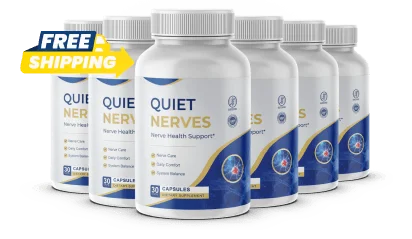
Quiet Nerves is a nerve-support formula that combines alpha-lipoic acid with magnesium glycinate, L-carnitine, CoQ10, turmeric and butcher's broom — one capsule a day, with a 60-day money-back guarantee. Check the current official-store pricing and refund terms.
See Quiet Nerves Pricing & GuaranteeHow to spot an underdosed nerve supplement
This is where most shoppers lose money, so it earns its own section. An underdosed supplement is one that names the right ingredients but includes too little of them to matter — a "label decoration" strategy. Three tells give it away:
- The proprietary blend. If the label lists five ingredients but gives one combined weight — "Nerve Support Blend, 500 mg" — you cannot tell how much of anything you are getting. That combined number could be 480 mg of cheap filler and a dusting of the actives. Transparency means a milligram figure per ingredient. A blend that hides the split is hiding it for a reason.
- The arithmetic that does not fit. A single capsule holds well under a gram of powder. If a product claims a study-level 600 mg of ALA plus meaningful B12, benfotiamine, carnitine and more, all in one small capsule, the math is fighting the marketing. Add up the study doses of everything named and see whether they could physically fit.
- The cheap-form giveaway. Cyanocobalamin instead of methylcobalamin, plain thiamine instead of benfotiamine, "magnesium oxide" doing the heavy lifting — cheap forms in the actives you can see suggest corners cut in the ones you cannot.
We apply exactly this checklist ingredient by ingredient across the category in our Acetyl-L-Carnitine for Nerve Health and Neuropathy: The Regeneration Evidence, Explained Honestly, and to a single product in our honest Quiet Nerves review.
Single ingredients or a combination formula?
Both can be "best" — for different buyers.
Single-ingredient capsules win on precision. A standalone 600 mg ALA capsule or a dedicated methylcobalamin tablet lets you hit the studied dose exactly and adjust one variable at a time. The cost is inconvenience: you are buying, tracking and swallowing several bottles, and the total price often creeps past a single combination product.
Combination formulas win on convenience and adherence — and adherence is not a footnote, because the research is clear that these ingredients only work when taken consistently for weeks. One capsule a day is a routine most people actually keep. The trade is that you accept the formulator's dosing choices, which is precisely why transparency and a money-back guarantee matter so much for this category. A combination formula that publishes its numbers and lets you return it if it does nothing for you removes most of the downside of the trade.
Where Quiet Nerves fits
Quiet Nerves sits in the combination-formula lane: one capsule daily built around alpha-lipoic acid plus magnesium glycinate, L-carnitine, turmeric extract, coenzyme Q10 and butcher's broom. On our three criteria it scores well on ingredient selection — ALA and magnesium are genuine, evidenced choices — and its strongest practical feature is the 60-day money-back guarantee, which lets you run a fair testing window at low financial risk. As with every combination product, the fair question is dose transparency: confirm the per-ingredient amounts before you judge value, and use the guarantee as your safety net. For readers who want the vitamin side of the equation in depth, our explainer on which B vitamins actually help neuropathy is the companion piece to this one.
Reading the price, not just the sticker
Value is the criterion shoppers get most wrong, because they compare bottle prices instead of cost per day. A $30 bottle that lasts 15 days is dearer than a $50 bottle that lasts 30, and a single-ingredient stack that needs three separate bottles can quietly cost more than one combination formula while asking you to swallow three times as many pills. Work out the cost per day at a study-level dose and the picture usually reorders itself.
Two structural factors move that number more than the sticker does. The first is multi-bottle pricing: most nerve supplements, Quiet Nerves included, drop sharply per bottle on three- and six-bottle orders — which happens to line up with the multi-month testing window these ingredients actually require, so the bulk price is often the honest price rather than an upsell. The second is the money-back guarantee. A 60-day guarantee effectively caps your downside: if a formula does nothing for you over a fair trial, a genuine refund policy means the "value" question was never really a gamble. For a category where results are individual and take weeks, that safety net is worth as much as any ingredient on the label.
A myth worth retiring
"More ingredients means a better formula." It is the opposite as often as not. Every extra active in a single small capsule competes for the same limited space, which forces each dose down. A twenty-ingredient "kitchen sink" label almost guarantees that nothing inside reaches a study dose. The best nerve supplements are usually focused, not crowded — a handful of proven actives at real amounts beats a long list of trace ones every time.
A focused nerve-support formula, guarantee included
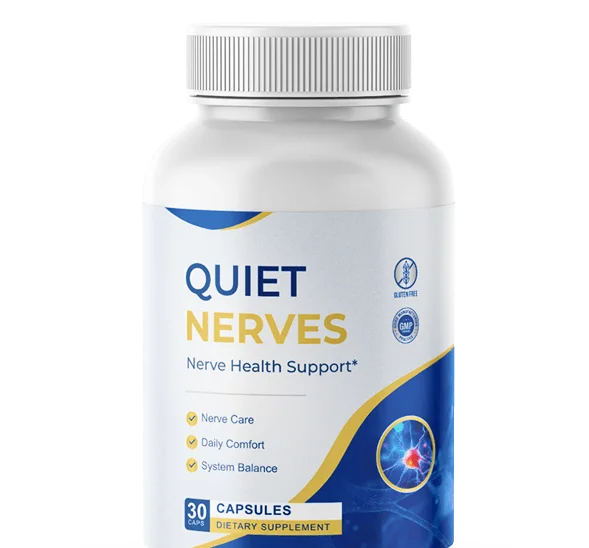
Alpha-lipoic acid plus five supporting actives, one capsule a day, 30 to a bottle, and 60 days to decide. See today's official-store pricing and full refund terms.
Order Quiet Nerves From The Official StoreFrequently asked questions
What are the best nerve health supplements in 2026?
The strongest nerve health supplements in 2026 are the ones built around four well-supported actives at honest doses: alpha-lipoic acid, methylcobalamin (active B12), benfotiamine (fat-soluble vitamin B1) and acetyl-L-carnitine. A supplement is judged best not by its marketing but by whether it uses these ingredients, states each amount clearly, chooses active vitamin forms, and prices fairly. Single-ingredient capsules and transparent combination formulas can both qualify; opaque proprietary blends generally do not.
Which ingredients actually support nerve health?
The four with the deepest human evidence are alpha-lipoic acid, methylcobalamin, benfotiamine and acetyl-L-carnitine. Alpha-lipoic acid is an antioxidant studied at 600 mg/day; methylcobalamin is the active form of B12 that helps maintain myelin; benfotiamine is a fat-soluble B1 that reaches tissue far better than plain thiamine; and acetyl-L-carnitine supports nerve-cell energy metabolism. Magnesium and CoQ10 play supporting roles. Everything else is secondary.
How do I judge whether a nerve supplement is underdosed?
Compare each ingredient's amount to the dose used in studies, then check whether that amount is even printed. A red flag is a proprietary blend that lists ingredients but only gives one combined weight, so you cannot tell how much of anything you are getting. If a label hides amounts, or if the total blend weight is too small to hold study-level doses of the actives it names, treat it as underdosed until proven otherwise.
Are active vitamin forms like methylcobalamin worth paying more for?
For most people they are a sensible upgrade. Methylcobalamin is the body-ready form of B12 and does not require conversion the way cheap cyanocobalamin does, which matters more for older adults and anyone with impaired conversion. The same logic favours benfotiamine over plain thiamine and methylfolate over folic acid. The price difference is usually small relative to the value of knowing the active form is what your nerves receive.
References
- NIH Office of Dietary Supplements — Vitamin B12: Fact Sheet for Health Professionals
- Ziegler D et al. Oral alpha-lipoic acid in symptomatic diabetic polyneuropathy (SYDNEY 2). Diabetes Care, 2006
- Balakumar P et al. The multifaceted therapeutic potential of benfotiamine. Pharmacol Res
- Sima AAF et al. Acetyl-L-carnitine in diabetic polyneuropathy: analysis of two trials. Diabetes Care
- 21 CFR 101.36 — Nutrition labeling of dietary supplements (eCFR)