Neuropathy Supplement Reviews: How to Judge What Actually Works in 2026
Do neuropathy supplements really work?
It depends on the ingredient and the amount. A few nutrients — alpha lipoic acid, benfotiamine, methylcobalamin and acetyl-L-carnitine — have been studied for nerve comfort and function, mostly at set doses used one at a time. Supplements are nutritional support, not a cure, and results belong to the doses the studies used.
- Alpha lipoic acid at about 600 mg a day has the deepest human trial record.
- Benfotiamine, methylcobalamin and acetyl-L-carnitine round out the evidence-backed shortlist.
- Ignore any review that ranks products without checking per-ingredient amounts.

Search “best neuropathy supplement” and you will meet a wall of listicles that all seem to agree, all seem to rank the same handful of brands, and almost none of which tell you the one thing that decides whether a bottle is worth buying: how many milligrams of each ingredient you actually get. This neuropathy supplement review takes the opposite approach. We are not going to hand you a numbered top-ten and tell you to trust it. We are going to give you the same four-part test our editors use, walk it through the ingredients that have real research behind them, and show you how to apply it to any product on the shelf — including Quiet Nerves, the formula this site covers.
The reason matters. Nerve-support supplements are one of the most crowded, most heavily marketed corners of the whole supplement aisle, and “clinically studied ingredients” is a phrase that appears on labels far more often than the studied dose does. Once you can read past the copy, the field gets a lot smaller and a lot easier to judge.
What the best neuropathy supplement reviews actually measure
A useful review is not a beauty contest between bottles. It is a checklist applied consistently to every product. Four questions do almost all the work:
- Are the ingredients named, or hidden in a “proprietary blend”? A proprietary blend lists ingredients but not their individual amounts — only the combined total. That is legal, and it is also the single biggest red flag in this category, because it makes the formula impossible to compare to research.
- Is there a per-ingredient milligram amount? Every claim you have ever read about a nerve nutrient came from a study that used a specific dose. Without the number, the claim is decorative.
- Which chemical form is used? Methylcobalamin is not cyanocobalamin; acetyl-L-carnitine is not plain L-carnitine; ubiquinol is not ubiquinone. Forms differ in price, absorption and what they have been studied for.
- What is the cost per daily serving? Sticker price is noise. A $70 bottle that lasts three months can be cheaper per day than a $30 bottle that lasts three weeks.
Run those four questions against any bottle and the marketing melts away. What is left is a formula you can actually rank. If you want the long version of that scoring method applied across the category, our Acetyl-L-Carnitine for Nerve Health and Neuropathy: The Regeneration Evidence, Explained Honestly lays every contender out in one table.
The ingredients that earn their place
Strip the category down to what has been tested in humans and the shortlist is refreshingly short. These are the actives worth paying for — and worth checking the dose on.
Alpha lipoic acid (ALA) — the strongest single ingredient
If any one nutrient anchors this category, it is alpha lipoic acid. The most-cited oral trials used 600 mg a day, taken as a standalone ingredient, and that figure is the benchmark every serious buyer should carry in their head. ALA is a fat- and water-soluble antioxidant, which is unusual and part of why it has been studied so heavily for nerve comfort. The catch for shoppers is that 600 mg is a physically large amount of powder — enough to fill much of a capsule on its own — so a multi-ingredient blend that promises ALA “plus” five other things, all in one small daily capsule, is worth a hard look at the numbers. For the full dosing picture, see our breakdown of the alpha lipoic acid dosage used in neuropathy research.
Benfotiamine + methylcobalamin — the classic pairing

Benfotiamine is a fat-soluble derivative of vitamin B1 (thiamine) that absorbs more readily than the standard water-soluble form. It is frequently combined with methylcobalamin, the active form of B12 that the body uses without conversion. This is the pairing you will see over and over in nerve formulas, and for good reason: B12 is directly involved in the maintenance of the myelin sheath that insulates nerves, and B1 status matters for nerve energy metabolism. When you read a neuropathy supplement review, a benfotiamine-plus-methylcobalamin base is a sign the formulator was reading the literature rather than the trend charts. What still matters is the amount of each.
Acetyl-L-carnitine — the regeneration outlier
Acetyl-L-carnitine (ALCAR) deserves a special note, because it is the rare ingredient in this category studied specifically for nerve-fiber support and regeneration rather than symptom comfort alone. That is a meaningfully different claim, and it is why the form matters so much here: plain L-carnitine and L-carnitine tartrate are not interchangeable with acetyl-L-carnitine, and a label that just says “L-carnitine” is not telling you which one you are getting. If a product wants credit for the ALCAR research, it needs to say ALCAR on the label.
The supporting cast
Beyond the core four, you will see turmeric extract (standardized to curcuminoids, valued for its antioxidant profile), coenzyme Q10, magnesium and botanicals such as butcher's broom. None of these is a headline nerve ingredient on its own, but they are reasonable inclusions in a broad support stack. The same rule applies: a standardization figure like “95% curcuminoids” describes concentration, not amount, so it is not a substitute for a milligram number.
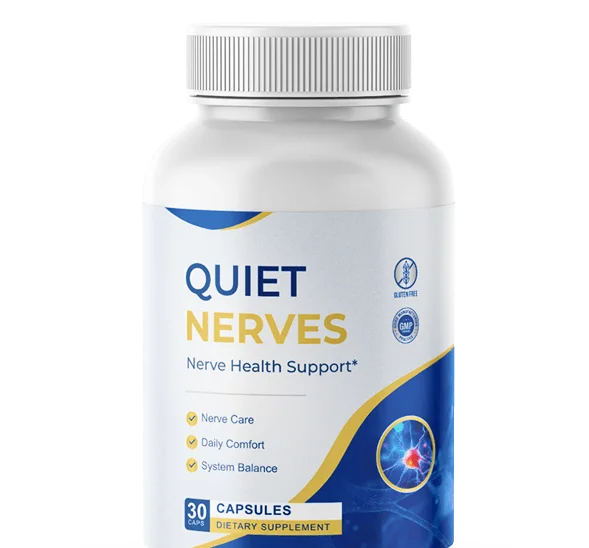
A done-for-you nerve stack in one daily capsule
Quiet Nerves bundles alpha lipoic acid, L-carnitine, turmeric extract, magnesium, butcher's broom and CoQ10 into a single once-daily capsule — and backs every order with a 60-day money-back guarantee, so you can read the Supplement Facts panel on the bottle before you commit long term.
Check Today's Price & GuaranteeCost per serving: the number reviews skip
Here is where most rankings quietly mislead. A single-ingredient ALA product at 600 mg a day typically costs somewhere around $10 to $20 a month. A multi-ingredient nerve formula usually lands between $30 and $70 a month, because you are paying for several actives, the convenience of one capsule, and often a better-absorbed form of each. Neither is “overpriced” by default — they are different products solving different problems.
The fair comparison is always cost per daily serving, and it is almost always lowest on the largest pack. Most nerve formulas, Quiet Nerves included, price a six-bottle order far below six single bottles — which is exactly why the sticker price on one bottle tells you so little. When you compare, divide the pack price by the number of days it covers, then set that number beside what the ingredients would cost bought separately. Convenience has real value; you are just entitled to know what you are paying for it.
A 60-second scorecard for any neuropathy supplement
You do not need a spreadsheet to judge a bottle. Turn the four-part test into a quick score you can run in a store aisle or a browser tab. Give one point for each “yes”:
- Are all active ingredients named individually, with no catch-all “proprietary blend” hiding the amounts?
- Is there a milligram amount printed for each active, not just a combined total?
- Does at least one core ingredient hit a research-relevant dose — for example, alpha lipoic acid at or near 600 mg?
- Are the specific forms named (methylcobalamin, acetyl-L-carnitine, ubiquinol) rather than vague umbrella terms?
- Can you work out the cost per daily serving from the price and the serving count?
Four or five points is a genuinely transparent product you can compare with confidence. Two or three means proceed with questions. Zero or one means the label is telling you almost nothing, and no amount of confident marketing copy changes that. The beauty of the scorecard is that it works the same way on a $20 bottle and a $200 one — price is not one of the questions, because transparency is what you are actually scoring.
What a fair trial of a neuropathy supplement looks like
Once you have chosen a product, give it a real chance rather than a token one. Nerve tissue turns over slowly, so a few days tells you nothing. A fair trial means taking the supplement every day, at the same time, ideally with a meal, for a solid eight to twelve weeks, and tracking how you feel in plain notes rather than relying on memory. Keep the rest of your routine reasonably steady over that window so you are not confusing yourself about what changed. This is also exactly where a money-back guarantee earns its keep: a return window long enough to cover a genuine trial means you can commit to the eight-to-twelve-week test without gambling the full cost on it.
Three myths that ruin a neuropathy supplement review
Myth 1: “Clinically studied ingredients” means the product is clinically studied. It does not. It means the ingredient — usually at a dose set by a study the brand did not run — has been studied. A formula only inherits that research if it matches the dose and form. This is the most important sentence in this entire review.
Myth 2: More ingredients is better. A capsule has a fixed volume. Every extra ingredient competes for the same physical space, which means a long, impressive-looking list can quietly force every individual amount down. Six well-dosed actives beat twelve token ones. When a label lists many ingredients but no amounts, assume the crowding is doing work the copy will not admit to.
Myth 3: A supplement can repair or cure nerve damage. No dietary supplement treats, cures or prevents neuropathy, and any product or review that says otherwise is making a claim it is not allowed to make. The honest frame is nutritional support: giving your nerves the building blocks and antioxidant cover that research associates with healthy nerve function, ideally alongside the medical care of a qualified professional. If a page promises to reverse anything, that is your cue to close the tab.
Where Quiet Nerves fits in a neuropathy supplement review

Quiet Nerves is a once-daily, 30-capsule nerve-support formula that combines six ingredients familiar from the shortlist above: magnesium glycinate, alpha lipoic acid, L-carnitine, turmeric extract at 95% curcuminoids, butcher's broom and coenzyme Q10. On the strength of that ingredient list, it is a sensibly chosen combination — it leads with the antioxidant and B-adjacent actives that dominate the research, rather than filler.
In the interest of the four-part test we opened with, one honest caveat: the sales page does not publish a Supplement Facts panel, so it does not state the milligram amount of each of the six ingredients before you buy. That is common in this category, and it is exactly why the 60-day money-back guarantee matters — it lets you order, read the panel printed on the bottle you receive, and return it if the amounts do not suit you. If you want our complete verdict on the formula, the full Quiet Nerves review covering whether it works and who it suits goes deeper than we can here.
The bottom line for shoppers: Quiet Nerves is a convenient, well-composed single-capsule stack for people who would rather not manage four separate bottles, sold through the official store with a return window that removes most of the risk of trying it. Treat it the way you would treat any nerve formula — check the panel on arrival, compare the cost per serving, and keep your expectations at the level of support, not cure.
Related reading
Frequently asked questions
Do neuropathy supplements really work?
It depends on the ingredient and the amount. A handful of nutrients — alpha lipoic acid, benfotiamine, methylcobalamin and acetyl-L-carnitine — have been studied for nerve comfort and function, mostly at specific doses used one ingredient at a time. Supplements are not drugs and do not treat or cure neuropathy; the honest expectation is nutritional support, and the results reported in trials belong to the doses those trials used, not to any blend that fails to state its amounts.
What should I look for in a neuropathy supplement review?
Look for four things: named ingredients rather than a hidden proprietary blend, a per-ingredient milligram amount you can compare to published research, the specific chemical form used (methylcobalamin versus cyanocobalamin, acetyl-L-carnitine versus plain L-carnitine), and the cost per daily serving. A review that ranks products without checking the amounts is ranking marketing copy, not formulas.
How much do good neuropathy supplements cost per month?
Single-ingredient alpha lipoic acid at 600 mg a day typically runs about $10 to $20 a month. Multi-ingredient nerve formulas usually land between $30 and $70 a month depending on the number of actives and the pack size you buy. Buying larger multi-bottle packs almost always lowers the cost per bottle, which is why per-serving cost is the fairer comparison than sticker price.
Which neuropathy supplement has the best evidence?
Alpha lipoic acid at roughly 600 mg a day has the largest body of human trial data among common nerve-support supplements. Benfotiamine, methylcobalamin and acetyl-L-carnitine also have supporting research, with acetyl-L-carnitine being the rare ingredient studied for nerve-fiber regeneration. None of this is a cure, and the evidence applies to the studied doses — which is why a formula that hides its amounts cannot inherit those results.
References
- Ziegler D et al. Oral treatment with alpha-lipoic acid (the SYDNEY 2 trial). Diabetes Care, 2006 — source of the 600 mg/day oral figure
- NIH Office of Dietary Supplements — Vitamin B12: Fact Sheet for Health Professionals
- Sima AAF et al. Acetyl-L-carnitine and nerve fiber regeneration in diabetic neuropathy. Diabetes Care, 2005
- Stracke H et al. Benfotiamine in the treatment of diabetic polyneuropathy (BENDIP study). Exp Clin Endocrinol Diabetes, 2008
- U.S. FDA — Dietary Supplement Labeling Guide (proprietary blend disclosure rules)
Ready to try the formula this review covers?
See current official-store pricing, the multi-bottle cost per serving, and the full 60-day money-back terms in one place.
Order Quiet Nerves From The Official Store