The Best Vitamins for Nerves, Ranked by the Evidence
What is the single best vitamin for nerve health?
For most people it is vitamin B12, ideally as methylcobalamin, because B12 builds and maintains the myelin sheath that insulates nerves and a real deficiency can cause nerve symptoms. But no single vitamin is the whole answer — B1 as benfotiamine, a capped amount of B6, and actives like alpha lipoic acid all contribute.
- B12 (myelin) and B1/benfotiamine (energy and AGE defense) lead the ranking.
- B6 helps nerve signaling but is capped near 100 mg/day long term — more can harm.
- Vitamin D, vitamin E, ALA and acetyl-L-carnitine round out a complete stack.

Ask the internet for the best vitamins for nerves and you will get a different answer on every page, usually one that happens to match whatever the site is selling. The truth is calmer and more useful: the vitamins that genuinely matter for nerve health are a short, well-defined list, each with a specific job, a specific dose that helps, and in one case a dose that hurts. This guide ranks them by the strength of the evidence, separates the proven from the marketing, and explains why a food-plus-supplement approach beats megadosing any single nutrient — then shows how a complete nerve formula pulls the shortlist together.
A word on expectations before we start. Vitamins are nutritional support, not medicine. They do not treat, cure or reverse nerve disease, and the biggest, most reliable wins come from correcting a genuine deficiency rather than piling extra on top of an already-adequate diet. Keep that frame and the rest of this ranking makes sense.
The ranking: best vitamins for nerves, in order of evidence
1. Vitamin B12 (methylcobalamin) — the myelin vitamin
B12 sits at the top for a simple reason: it is directly required to build and maintain myelin, the fatty insulation that lets nerve signals travel cleanly. A real B12 deficiency — common in older adults, vegans, people on certain diabetes and acid-reflux medications, and anyone with absorption problems — can produce tingling, numbness and balance issues, and correcting it can resolve symptoms that were caused by the shortfall. Choose methylcobalamin, the active form the body uses without conversion, over cheaper cyanocobalamin where you can. This is the one nerve vitamin most worth checking your actual blood level on. We cover the mechanism in depth in our explainer on how the B vitamins relate to neuropathy.
2. Vitamin B1 / benfotiamine — energy and AGE defense
Thiamine (B1) powers the energy metabolism nerves depend on, and its fat-soluble derivative benfotiamine absorbs far better than standard thiamine. Benfotiamine has been studied for its role in blunting advanced glycation end-products (AGEs) — the sugar-damaged proteins implicated in nerve stress — which is why it shows up in serious nerve formulas paired with B12. If B12 is the insulation, think of B1 as the fuel line.
3. Vitamin B6 — helpful, but capped
B6 (pyridoxine) is essential for the neurotransmitter signaling that nerves run on, and a deficiency causes problems. Here is the twist that most “best vitamins for nerves” lists skip: B6 is the one vitamin on this list that can cause nerve symptoms when taken in large amounts over long periods. Long-term intake is generally kept around 100 mg a day or less. It is the clearest case in all of supplementation that more is not better — and a reason to be wary of B-complex products that stack a huge B6 dose for label appeal. If you want the detail, our note on safe B6 dosing for neuropathy spells out the ceiling.

4. Vitamin D — the supporting player worth testing
Low vitamin D status has been associated with nerve discomfort in a number of observational studies, and deficiency is widespread, especially in winter and in people who spend little time outdoors. Vitamin D is not a headline nerve vitamin, but it is cheap to test and easy to correct, and a shortfall is worth ruling out as part of the picture rather than assuming.
5. Vitamin E — antioxidant cover
Vitamin E is a fat-soluble antioxidant that helps protect nerve cell membranes from oxidative stress. Severe, genuine vitamin E deficiency can cause neurological problems, though that is rare in well-fed populations. As a supporting player in a broad stack it is reasonable; as a standalone “nerve cure” it is oversold.
Beyond vitamins: ALA and acetyl-L-carnitine
Two of the most-studied nerve-support ingredients are not vitamins at all. Alpha lipoic acid is an antioxidant with the deepest human research record in this space, most-cited at 600 mg a day. Acetyl-L-carnitine is the rare ingredient studied for nerve-fiber support rather than symptom comfort alone. A genuinely complete nerve stack pairs the core vitamins with these two — which is exactly the logic behind a done-for-you formula rather than a drawer full of separate bottles.
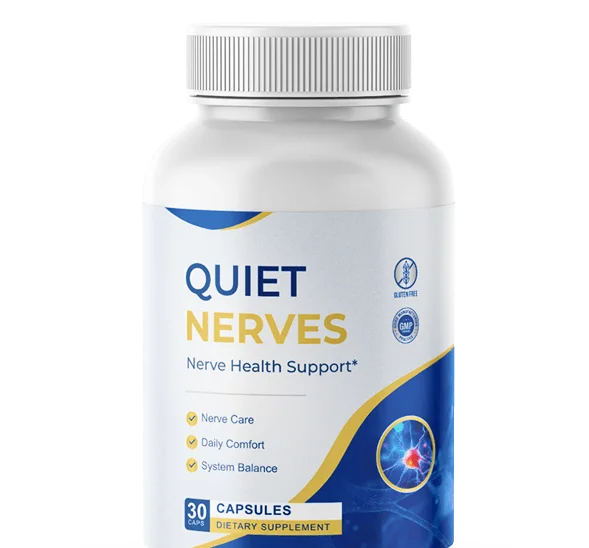
The whole shortlist in one daily capsule
Quiet Nerves brings the nerve-support logic together — alpha lipoic acid, L-carnitine, magnesium glycinate, turmeric, butcher's broom and CoQ10 — in one capsule a day, with a 60-day money-back guarantee so you can read the panel on the bottle before you commit.
See Quiet Nerves Pricing & GuaranteeWhy food-plus-supplement beats megadosing
The instinct when you read about a helpful nutrient is to take a lot of it. For nerve vitamins that instinct is often wrong, and sometimes actively counterproductive. Three reasons:
- The B6 ceiling is real. As above, high long-term B6 can cause the very symptoms people take it to avoid. That alone should retire the “more is better” reflex.
- Water-soluble vitamins have a saturation point. Past a certain intake, extra B12 or B1 is largely excreted. You are not building a reserve; you are making expensive urine.
- Food supplies cofactors supplements miss. Whole foods deliver vitamins alongside the minerals, fats and phytonutrients that help the body use them. A supplement fills a gap; it does not replace the diet.
The sensible model is to eat a nerve-friendly diet, correct any tested deficiency, and use a focused supplement to cover the nutrients that are hard to get enough of — not to chase ever-higher numbers. That is the whole case for a measured, complete formula over a scattershot pile of megadose pills.
Where to get nerve vitamins from food first
Before you buy anything, it is worth knowing that the shortlist above is well represented on the plate. Building these foods into a normal week does more for a mild shortfall than any single capsule, and it supplies the cofactors a pill cannot:
- Vitamin B12: shellfish, salmon, eggs, dairy, and fortified foods — the hardest one for plant-based eaters, which is where a supplement earns its keep.
- Vitamin B1 (thiamine): whole grains, legumes, pork and sunflower seeds.
- Vitamin B6: poultry, fish, potatoes, chickpeas and bananas — easy to hit from food, which is exactly why megadosing it is unnecessary and risky.
- Vitamin E: nuts, seeds, and plant oils.
- Magnesium: leafy greens, nuts, seeds, beans and dark chocolate.
The gaps that remain after a solid diet — often B12 for older adults and plant-based eaters, and the non-vitamin actives like alpha lipoic acid that barely register in food — are precisely what a targeted nerve formula is for. Food first, supplement for the gap: that order rarely steers you wrong.
Signs your nerve-vitamin intake might be low
You cannot diagnose a deficiency from symptoms alone, and you should not try to — that is what testing and a clinician are for. But certain patterns make a nutritional gap more likely and are worth taking seriously as a prompt to check rather than to self-medicate. A B12 shortfall, for instance, is more common in older adults, in people eating little or no animal food, and in anyone on long-term acid reducers or the diabetes drug metformin. Tingling, numbness, balance changes, unusual fatigue and a sore tongue are among the signs classically linked to low B12, though every one of them has other possible causes too. The honest move is the same in each case: if a pattern fits, ask for the relevant blood test before assuming, then correct a confirmed gap with the right nutrient at the right dose. This is precisely why we keep steering back to testing — a supplement aimed at a gap that isn't there is money spent on reassurance, not results.
How to take nerve vitamins so they actually count
Buying the right vitamins is only half the job; taking them in a way the body can use is the other half. A few habits make a real difference to whether a nerve stack does anything:
- Take fat-soluble nutrients with a meal. Vitamin D, vitamin E and alpha lipoic acid absorb better alongside food that contains some fat. A dose swallowed on an empty stomach in a rush is a dose partly wasted.
- Be consistent, not heroic. Nerve tissue turns over slowly, so a steady daily intake over weeks beats a big, sporadic one. The best formula is the one you remember to take, which is a genuine point in favor of a single once-daily capsule over four separate bottles.
- Mind the interactions. High-dose supplements can interact with medications — alpha lipoic acid may affect blood sugar, and some nutrients interfere with absorption of certain drugs. If you take prescription medicine, clear a new nerve stack with your pharmacist or doctor first.
- Give it a fair window. Judge a vitamin or nerve formula over eight to twelve uninterrupted weeks, tracking how you feel, rather than expecting a result in the first few days.
None of this is glamorous, but it is the difference between a supplement that supports your nerves and one that just moves through you. A guaranteed return window helps here too, because it gives you room to run that full trial without pressure.
Two objections worth answering
“If I just eat well, do I need a nerve supplement at all?” Maybe not — and that is an honest answer you will rarely read on a supplement site. If your diet is varied and your bloodwork is clean, food may cover you. Supplements earn their place when intake is low, absorption is impaired, or you want a convenient, consistent daily baseline of the harder-to-get actives. Test first where you can.
“Aren't multivitamins good enough?” A generic multivitamin usually contains token amounts of B12 and B1 and rarely any alpha lipoic acid or acetyl-L-carnitine at all. It is designed for broad nutritional insurance, not nerve support specifically. A purpose-built nerve formula concentrates on the shortlist above, which is the difference between covering a base and covering it meaningfully. If you are comparing options, our roundup of the best nerve health supplements of 2026 puts the dedicated formulas side by side.
Where Quiet Nerves fits

Quiet Nerves is a once-daily nerve-support formula built around six ingredients: magnesium glycinate, alpha lipoic acid, L-carnitine, turmeric extract at 95% curcuminoids, butcher's broom and coenzyme Q10. It leans on the antioxidant and metabolic actives that dominate the research rather than padding the label, which is a point in its favor as a convenient, single-capsule baseline.
Two honest notes so you can judge it against the standard we set above. First, Quiet Nerves is built around ALA, carnitine and supporting botanicals rather than a high-dose B-vitamin core, so if your priority is specifically B12 or benfotiamine you may want to confirm the panel or pair it with a targeted B-vitamin. Second, the sales page does not publish per-ingredient milligram amounts before purchase — which is exactly why the 60-day money-back guarantee is the feature that de-risks trying it: you can order, read the Supplement Facts panel on the bottle, and return it if the amounts are not what you need. Sold through the official store, it is a reasonable, low-friction way to give a complete nerve stack a consistent eight-to-twelve-week trial.
Related reading
Frequently asked questions
What is the single best vitamin for nerve health?
For most people the highest-value single nutrient is vitamin B12, ideally as methylcobalamin, because B12 is essential for building and maintaining the myelin sheath that insulates nerves and a genuine deficiency can produce nerve symptoms. That said, no single vitamin is the whole answer. B1 (as benfotiamine), B6 in a capped amount, and non-vitamin actives such as alpha lipoic acid all contribute, which is why a complete nerve stack usually outperforms any one pill.
Can vitamins repair damaged nerves?
Vitamins are nutritional support, not a repair kit, and no supplement treats or cures nerve damage. What the research supports is narrower and still useful: correcting a real deficiency of a nerve-relevant vitamin such as B12 can improve symptoms caused by that deficiency, and nutrients like B vitamins, vitamin D, vitamin E and alpha lipoic acid supply raw materials and antioxidant cover that healthy nerve function depends on. Structural repair, where it happens, is the body's work; nutrition sets the conditions.
How long before nerve vitamins make a difference?
There is no guaranteed timeline, and anyone promising one is guessing. Blood levels of a depleted vitamin can rise within weeks, but any change you actually feel usually unfolds over one to three months of consistent daily use, because nerve tissue turns over slowly. Give any vitamin or nerve formula a fair, uninterrupted trial of at least eight to twelve weeks before judging it, and track how you feel rather than expecting an overnight switch.
Which vitamins can be harmful to nerves in high doses?
Vitamin B6 is the important one: taken at high doses over long periods it can itself cause nerve symptoms such as tingling, which is why long-term intake is generally kept around 100 mg a day or less unless a clinician directs otherwise. This is the clearest example of why more is not better with nerve vitamins. Fat-soluble vitamins like A and D also have upper limits worth respecting, so match the dose to the guidance rather than megadosing.
References
- NIH Office of Dietary Supplements — Vitamin B12: Fact Sheet for Health Professionals
- NIH Office of Dietary Supplements — Vitamin B6: Fact Sheet for Health Professionals (upper intake level)
- NIH Office of Dietary Supplements — Thiamin (Vitamin B1): Fact Sheet for Health Professionals
- Ziegler D et al. Oral treatment with alpha-lipoic acid (the SYDNEY 2 trial). Diabetes Care, 2006
- NIH Office of Dietary Supplements — Vitamin D: Fact Sheet for Health Professionals
Put the shortlist to work
Give a complete nerve-support stack a fair trial. Check current official-store pricing, multi-bottle savings and the 60-day money-back terms.
Order Quiet Nerves From The Official Store