Acetyl-L-Carnitine for Nerve Health and Neuropathy: The Regeneration Evidence, Explained Honestly
Does acetyl-L-carnitine help nerve health?
Acetyl-L-carnitine for neuropathy is unusual: it fuels the mitochondrial energy nerve cells depend on and carries evidence pointing toward actual nerve-fibre regeneration, not just symptom masking. Studied doses run 1,000 to 3,000 mg a day over months. It supports nerve health, but it is not a cure.
- Fuels mitochondrial energy — the fuel supply nerve cells rely on to function and repair.
- Regeneration signal — studies point to nerve-fibre regeneration, not just relief.
- Studied at 1,000 to 3,000 mg/day — taken consistently, results build over months.

Most nerve-support ingredients are about damping symptoms. Acetyl-L-carnitine for neuropathy is interesting for a different reason: it is one of the very few actives with human evidence pointing toward actual nerve-fibre regeneration, not just a quieter version of the discomfort. That distinction is worth taking seriously — and worth keeping honest, because "regeneration evidence" is easy to oversell. This guide lays out what acetyl-L-carnitine really does, what the studies have and have not shown, the doses researchers used, and how to set expectations that are optimistic without tipping into fantasy.
The short version: acetyl-L-carnitine (often abbreviated ALCAR) supports the energy machinery inside nerve cells, and in that role it has been studied for both easing nerve discomfort and encouraging the nerve's own repair processes. It is generally well tolerated, it is taken consistently over months rather than days, and — like everything on this site — it supports nerve health rather than treating or curing any condition.
What acetyl-L-carnitine is and how it reaches your nerves
Carnitine is a compound your body makes from amino acids and also gets from food, and its everyday job is to shuttle fatty acids into the mitochondria — the tiny power plants inside each cell where fuel is turned into usable energy. Acetyl-L-carnitine is the acetylated form, and that small chemical difference matters: the acetyl group makes it more readily absorbed and, in particular, better able to cross into nervous tissue than plain L-carnitine. In other words, ALCAR is the version of carnitine built for reaching the nerves and the brain.
Why does that matter for nerves specifically? Because nerve cells are among the most energy-dependent tissue in the body. A peripheral nerve fibre can run an astonishing distance from the cell body, and keeping that whole length powered, insulated and signalling cleanly is metabolically expensive. When the energy supply to nerve cells falters, function suffers — which is exactly the gap acetyl-L-carnitine is positioned to help fill by supporting mitochondrial energy production right where it is needed.
The regeneration evidence: what makes acetyl-L-carnitine for neuropathy different
Here is the part that sets this ingredient apart. Several human studies of acetyl-L-carnitine in peripheral neuropathy have reported not only improvements in nerve pain and in vibration perception, but also measurable increases in nerve-fibre regeneration on nerve biopsy. That is a genuinely different claim from "it made the tingling less annoying." It points to the ingredient supporting the nerve's structural repair, not merely turning down the volume on symptoms.
That is why acetyl-L-carnitine anchors the repair-and-regeneration conversation, and why we treat it as a cornerstone ingredient in our broader guide to nerve regeneration supplements and what the science supports. If your interest is specifically in ingredients that may help nerves rebuild rather than just cope, ALCAR is close to the top of a very short evidence-backed list.
Now the honesty the topic demands. The regeneration evidence is promising, not conclusive. Trials have varied in size, quality and length; benefits tend to be modest and to build slowly over months; and the strongest signals have appeared in specific settings such as diabetic and antiretroviral-associated neuropathy. "Evidence pointing toward regeneration" is an accurate and genuinely encouraging statement. "Regrows your nerves" is not. Set the expectation at support for the nerve's own repair machinery, given time and consistency, and you will be reading the science correctly.

Want repair-focused actives in one daily capsule?
Quiet Nerves pairs its nerve-support actives into a single daily capsule, backed by a 60-day money-back guarantee — enough of a window to start a fair, consistent trial. Check the current official-store pricing and the full refund terms before you decide.
See Quiet Nerves Pricing & GuaranteeHow much acetyl-L-carnitine should you take for neuropathy?
The studied range is fairly consistent. Research on acetyl-L-carnitine for neuropathy has generally used 1,000 to 3,000 mg per day, most often split into divided doses — something like 500 to 1,000 mg taken two or three times daily. Crucially, several of the trials that reported benefits ran the supplement for up to a year. This is not an ingredient you judge in a fortnight; it is one you commit to over months, because the effects, where they appear, accumulate gradually.
There is no official recommended intake, because acetyl-L-carnitine is a supplement rather than a classified essential nutrient with a set requirement. That places the dosing decision with you and your clinician, and it is worth having that conversation properly if you take medication, manage diabetes or thyroid function, or have a history of seizures. Splitting the daily amount also tends to sit more comfortably with the stomach and, as we will see, with sleep.
One practical framing helps here. Because ALCAR is taken consistently and rewards a long runway, a generous return window on whatever product you choose is genuinely useful — it lets you begin a fair trial without betting a large sum up front on an ingredient whose payoff, if it comes, comes slowly. That is the same reasoning we apply when weighing value across the category in our comparison of the best nerve health supplements for 2026.
Acetyl-L-carnitine side effects and who should be cautious
Acetyl-L-carnitine is generally well tolerated, which is part of why it has been used in year-long studies without major safety alarms. The side effects that do come up are mostly mild. The most notable is insomnia or restlessness — ALCAR can be mildly stimulating for some people, which is exactly why taking the last dose earlier in the day is a common and sensible tweak. Occasional stomach upset and, at higher intakes, a faint fishy body odour are the other reports you will see.
A few people should be more careful. If you are pregnant or breastfeeding, have a thyroid condition, have a seizure history, or take medication such as blood thinners, acetyl-L-carnitine is a "check first" ingredient rather than a "just try it" one. None of this makes it high-risk — it sits comfortably at the well-tolerated end of the supplement spectrum — but "well tolerated" is never the same as "no conversation needed with your clinician."
Three honest expectations to set before you start
It is slow. The regeneration and symptom benefits in the literature emerged over months, not days. If you abandon acetyl-L-carnitine after two weeks because nothing dramatic happened, you have not actually tested it. Consistency over a long window is the whole point.
It is support, not a cure. The evidence for nerve-fibre regeneration is real and unusual, but it is modest in size and strongest in particular contexts. Frame ALCAR as backing your nerves' own repair processes, not as a guaranteed rebuild, and you will avoid the disappointment that comes from believing the loudest version of the marketing.
It works best in company. Acetyl-L-carnitine pairs naturally with actives that tackle the other side of nerve stress — oxidative damage in particular. That is why it is so often stacked with alpha-lipoic acid and its studied neuropathy dosage, an antioxidant with its own nerve evidence. Energy support plus antioxidant support covers more of the biology than either one alone.
How acetyl-L-carnitine fits into a complete nerve formula
Put the picture together and a well-built nerve-support formula tends to combine several complementary actives: acetyl-L-carnitine for mitochondrial energy and its regeneration signal, alpha-lipoic acid for antioxidant defence, active-form B12 to help maintain the myelin sheath, and other supporting B vitamins in sensible amounts. Each covers a different mechanism, and together they address more of what nerves actually need than any single ingredient can. That combination logic is the thread running through our whole library, including our guide to supplements for nerve repair and realistic timelines.
Quiet Nerves is built on exactly this combination approach, folding its actives into a single once-daily capsule with a 60-day money-back guarantee that suits the long, consistent runway acetyl-L-carnitine really needs. As always, the fair questions to ask any combination product — ours included — are whether it uses well-studied forms, whether the amounts are disclosed rather than buried in a proprietary blend, and whether the guarantee gives you a real window to judge it. Ask those, and you will buy on evidence rather than on hope.
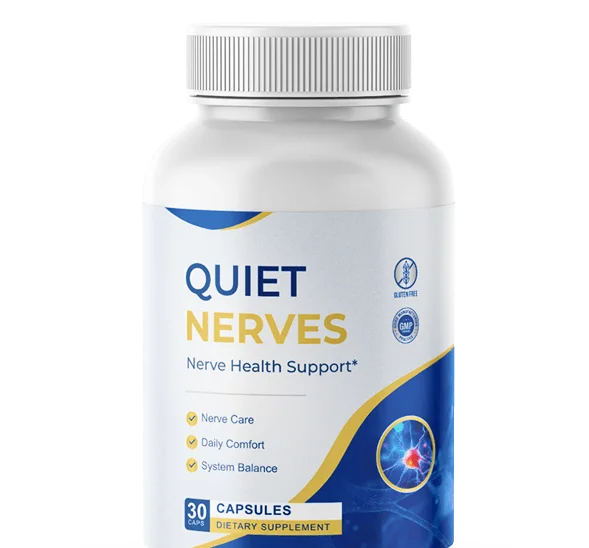
Repair-focused actives, one capsule a day
Quiet Nerves combines its ingredients into a single daily capsule, 30 to a bottle, with 60 days to decide — a fair window for an ingredient that works over months. See today's official-store pricing and full refund terms.
Order Quiet Nerves From The Official StoreFrequently asked questions
What does acetyl-L-carnitine do for nerves?
Acetyl-L-carnitine is an amino-acid derivative that helps shuttle fatty acids into the mitochondria, the energy factories inside cells. Nerve cells are highly energy-dependent, so this support for mitochondrial energy production is the core of why acetyl-L-carnitine is studied for nerve health. Research also points to a role in supporting nerve-fibre regeneration and easing nerve discomfort. It supports nerve health rather than curing any condition.
How much acetyl-L-carnitine should I take for neuropathy?
Studies on acetyl-L-carnitine for neuropathy have generally used 1,000 to 3,000 mg per day, often split as 500 to 1,000 mg taken two or three times daily, and in several trials continued for up to a year. It is taken consistently rather than as needed, because any benefit builds over time. There is no official recommended dose, so agree the right amount with your clinician, particularly if you take medication or manage a health condition.
Does acetyl-L-carnitine help nerves regenerate?
Acetyl-L-carnitine is one of the few nerve-support ingredients with evidence pointing toward actual nerve-fibre regeneration rather than symptom masking alone. Some studies have reported increases in nerve-fibre regeneration and improvements in nerve pain and vibration perception. The evidence is promising rather than conclusive, and results build slowly over months, so it is best framed as support for the nerve's own repair processes, not a guaranteed or rapid fix.
What are the side effects of acetyl-L-carnitine?
Acetyl-L-carnitine is generally well tolerated. The most commonly reported side effects are mild and include occasional insomnia or restlessness, so many people take their last dose earlier in the day, plus the odd upset stomach or fishy body odour at higher intakes. It is not a substitute for medical care, and anyone who is pregnant, breastfeeding, has a thyroid condition, or takes medication such as blood thinners should check with a healthcare professional before starting.
References
- NIH Office of Dietary Supplements — Carnitine: Fact Sheet for Health Professionals
- Sima AAF et al. Acetyl-L-carnitine improves pain, nerve regeneration, and vibratory perception in patients with chronic diabetic neuropathy. Diabetes Care
- Li S et al. Acetyl-L-carnitine in the treatment of peripheral neuropathic pain: a systematic review and meta-analysis. PLoS One
- Traina G. The neurobiology of acetyl-L-carnitine. Front Biosci
- Malaguarnera M. Acetyl-L-carnitine: tolerability and safety in clinical use. Metab Brain Dis