Benfotiamine for Nerve Damage: Benefits, Dose and What the Evidence Really Says
Does benfotiamine help with nerve damage?
Benfotiamine is a fat-soluble form of vitamin B1 that reaches nerve tissue far better than plain thiamine and helps limit the AGE damage driven by high blood sugar. It is studied most for diabetic nerve stress at around 300 to 600 mg a day. It supports nerve health, but it is not a cure.
- Fat-soluble B1 — reaches 5 to 25 times higher blood and tissue levels than plain thiamine.
- Blocks AGE formation — the glucose-driven damage that stresses nerve fibres.
- Commonly studied at 300 to 600 mg/day — and generally well tolerated.

Benfotiamine for nerve damage is one of the few supplement stories where the marketing and the biochemistry actually point in the same direction. It is a fat-soluble cousin of vitamin B1 (thiamine), and it has earned a genuine place in the nerve-support conversation because of a single, well-documented advantage: it gets to the tissue that ordinary thiamine struggles to reach. That does not make it a miracle, and it certainly does not make it a cure. But if you are trying to separate the real actives from the label filler, benfotiamine belongs in the "worth understanding" column.
This guide walks through what benfotiamine actually does for nerves, why its fat-soluble chemistry matters, the doses researchers have tended to use, who it is most relevant for, and how to read a label so you are paying for the active form rather than a cheaper stand-in. The honest through-line: benfotiamine supports nerve health and is studied most seriously for glucose-driven nerve stress, but it is a support ingredient, not a treatment, and it works best as part of a complete formula rather than as a lone hero.
What benfotiamine is, and why nerves care about B1
Thiamine (vitamin B1) is an essential nutrient that acts as a cofactor in the reactions cells use to turn glucose into usable energy. Nerves are energy-hungry tissue, so when thiamine runs short the consequences show up there first — classic thiamine-deficiency states are recognised causes of nerve symptoms. In that narrow sense, B1 has always mattered for nerves. The problem was never whether thiamine helps; it was getting enough of it to stay where it is needed.
Plain thiamine is water-soluble. That sounds harmless, but it means the body absorbs it through a saturable transport system and excretes the surplus quickly, so pushing a large oral dose mostly fills the toilet rather than the tissue. Benfotiamine was developed to solve exactly this. It is a synthetic, fat-soluble derivative of thiamine that passes more readily across cell membranes, then converts to the active form inside the body. The practical result is dramatically better delivery, which is the entire reason it shows up on serious nerve-support labels.
How benfotiamine for nerve damage differs from regular thiamine
The headline number is the one worth remembering: studies comparing the two forms have reported that benfotiamine achieves roughly five to twenty-five times higher blood and tissue levels than an equivalent oral dose of plain thiamine. That is not a rounding error — it is the difference between a nutrient that reaches nerve tissue in meaningful amounts and one that is largely flushed away before it can do anything.
This is also why label-reading matters so much here. Two products can both claim to contain "vitamin B1," and one may deliver a small fraction of what the other does simply because of the form it uses. When a formula lists benfotiamine specifically, it is signalling that it was built for absorption rather than for the ingredient panel to look busy. This is the same principle we cover for the whole B-vitamin group in our explainer on vitamin B and neuropathy and what actually helps — the form on the label often matters as much as the amount.
One more distinction is worth stating plainly, because it is a common point of confusion: benfotiamine is not a "better vitamin B1" in the sense of doing something thiamine cannot. Inside the body it becomes the same active molecule. What changes is how much of it arrives. Think of it as a delivery upgrade for an ingredient that was always relevant, not a new ingredient with new powers.
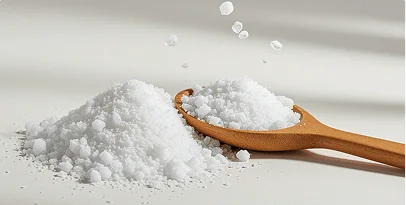
The mechanism that gets benfotiamine studied: AGEs and glucose
Benfotiamine's most-researched role centres on advanced glycation end-products, or AGEs. These are damaging molecules that form when excess sugar reacts with proteins and fats in the body — a process that speeds up when blood glucose runs consistently high. AGEs are implicated in the nerve stress and vascular damage that accompany long-term high blood sugar, which is why they come up so often in the diabetic-neuropathy literature.
Here is where the B1 connection closes the loop. By boosting the activity of an enzyme called transketolase, benfotiamine helps divert excess glucose down a safer metabolic pathway rather than into the reactions that generate AGEs. In plain terms, it supports the body's own machinery for processing surplus sugar before that sugar can do glycation damage. That is a real, plausible mechanism — and it is the reason benfotiamine is studied specifically in the context of glucose-driven nerve problems rather than nerve pain in general.
The responsible caveat: "studied for" is not "proven to cure." The mechanism is well described and the delivery advantage is genuine, but human trials on nerve outcomes have been mixed in size and duration, and benfotiamine is best understood as a support ingredient that targets one specific driver of nerve stress. It is not a substitute for managing blood sugar itself, and it is not a treatment for any diagnosed condition.
Want benfotiamine in a complete once-daily nerve formula?
Quiet Nerves pairs its actives into a single daily capsule, backed by a 60-day money-back guarantee — a low-risk way to run a fair testing window. Check the current official-store pricing and the full refund terms before you decide.
See Quiet Nerves Pricing & GuaranteeBenfotiamine dose: how much researchers have used
There is no official recommended intake for benfotiamine, because it is a supplemental form rather than an essential nutrient with its own daily requirement. What we have instead is a range drawn from the studies. Most research on benfotiamine for nerve support has used somewhere between 300 and 600 mg per day, frequently split into two or three doses and taken consistently for several weeks to a few months before any assessment. Some protocols front-loaded a higher amount early and stepped down to a maintenance dose later.
For everyday, general support, you will also see smaller amounts of benfotiamine folded into B-complex or combination nerve formulas alongside active-form B12 and other actives. That is a reasonable place for it, because the nerve-relevant B vitamins work as a group rather than in isolation. The larger stand-alone doses tend to appear in the research setting and in products aimed specifically at people with glucose-driven concerns.
Two practical points. First, consistency beats intensity: benfotiamine is not a take-it-once painkiller, and the studies that saw effects ran for weeks to months, so a fair personal trial means giving it real time. Second, because the most relevant use case overlaps with diabetes, anyone managing blood sugar or taking medication should confirm the right dose with a clinician rather than self-prescribing at the top of the range. A 60-day guarantee window, where a product offers one, happens to line up well with the timescale over which you would actually expect to notice anything.
Who benfotiamine is most relevant for
Because its signature mechanism is about glucose and AGEs, benfotiamine is most relevant for people whose nerve concerns are tied to high or poorly controlled blood sugar — the diabetic and pre-diabetic neuropathy setting is where the bulk of the research sits. If that describes your situation, benfotiamine is one of the more mechanistically sensible B-vitamin choices you can make, provided it is one part of a broader plan that includes managing the underlying blood sugar.
It is also a logical pick for anyone who simply wants the most bioavailable form of B1 in their nerve-support stack, regardless of the cause, since the delivery advantage applies across the board. Where benfotiamine is a weaker bet is for nerve symptoms that have nothing to do with glucose or a B1 shortfall — compression injuries, certain medication effects, or other drivers — because the specific pathway it targets simply is not the problem in those cases. This is the same honest logic we apply across the category: match the active to the actual driver rather than hoping one ingredient covers everything. Our roundup of the best nerve health supplements for 2026 works through that matching process ingredient by ingredient.
Is benfotiamine safe? Side effects and cautions
On the safety side, benfotiamine has a reassuring record. It is generally well tolerated in studies, including at the higher end of the doses used, and it does not carry the kind of toxicity ceiling that makes some other B vitamins risky at high intake. That last point is important, because it is a genuine contrast with vitamin B6 — where sustained high doses can cause the very nerve symptoms people are trying to relieve. We cover that specific ceiling in detail in our guide to vitamin B6 for neuropathy dose and safety, and it is a useful reminder that "more B vitamin" is not automatically safer.
The most commonly reported side effect of benfotiamine is mild stomach upset, and even that is uncommon. There is no established upper limit and no pattern of serious adverse effects at the doses typically used, which is part of why it is viewed as a low-risk ingredient. As always, "low-risk" is not "risk-free," and benfotiamine is not a substitute for medical care. If you are pregnant, breastfeeding, taking medication, or managing a health condition — diabetes very much included — run it past a healthcare professional before you start.
How benfotiamine fits into a complete nerve formula
Benfotiamine rarely does its best work alone. The nerve-support ingredients with the strongest rationale tend to complement each other: active-form B12 (methylcobalamin) to help maintain the myelin sheath, a modest and clearly stated dose of B6, and non-vitamin actives such as alpha-lipoic acid and its studied neuropathy dosage, which brings an antioxidant angle that pairs naturally with benfotiamine's anti-glycation role. A formula that combines these is covering more of the biology than any single ingredient can.
Quiet Nerves sits in exactly this combination lane, pairing its actives into a single once-daily capsule with a 60-day money-back guarantee that lets you test it at low risk. When you evaluate any combination product — ours included — the fair questions are the same: does it use benfotiamine rather than plain thiamine, is the B6 dose kept sensibly low, and is each amount actually disclosed on the label rather than hidden in a proprietary blend? Those three checks separate a formula built for nerves from one built for margin.
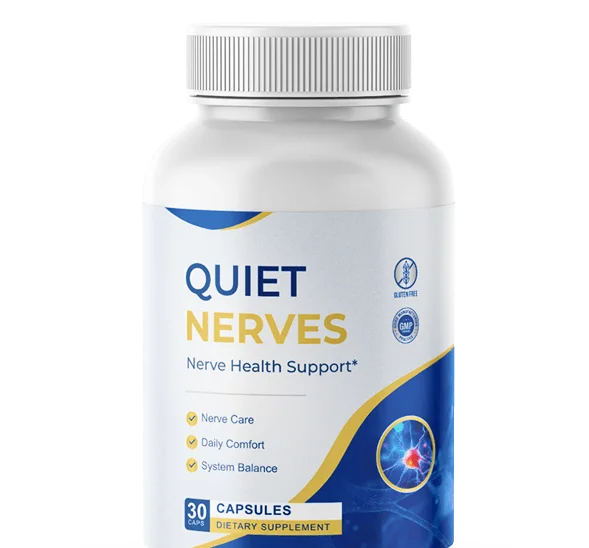
Benfotiamine plus the actives that pair with it, once a day
Quiet Nerves combines its ingredients into a single daily capsule, 30 to a bottle, with 60 days to decide. See today's official-store pricing and full refund terms.
Order Quiet Nerves From The Official StoreFrequently asked questions
What does benfotiamine do for nerve damage?
Benfotiamine is a fat-soluble form of vitamin B1 (thiamine) that reaches the blood and nerve tissue far more effectively than plain thiamine. Its most-studied job is helping the body process excess glucose and limiting advanced glycation end-products (AGEs), a type of molecular damage linked to nerve stress in people with high blood sugar. It supports nerve health rather than curing any condition, and it works best where a thiamine shortfall or glucose-driven damage is part of the picture.
How is benfotiamine different from regular thiamine (B1)?
Regular thiamine is water-soluble, so it is poorly retained and much of a large oral dose is simply excreted. Benfotiamine is fat-soluble, which lets it cross cell membranes and reach roughly five to twenty-five times higher blood and tissue levels than an equivalent dose of plain thiamine. That superior delivery is the whole reason benfotiamine appears on nerve-support labels where cheaper formulas just list thiamine.
What is a typical benfotiamine dose?
Most studies have used somewhere between 300 and 600 mg of benfotiamine per day, often split into two or three doses and taken for several weeks to a few months before judging results. Smaller amounts appear in general B-complex formulas for everyday support. There is no official recommended dose because benfotiamine is a supplement rather than an essential nutrient in its own right, so discuss the right amount with your clinician, especially if you manage diabetes or take medication.
Is benfotiamine safe and does it have side effects?
Benfotiamine is generally well tolerated in studies, even at the higher end of the doses used, and it does not carry the toxicity concerns attached to megadoses of some other B vitamins such as B6. Mild stomach upset is the most commonly reported issue and is uncommon. As with any supplement it is not a substitute for medical care, and anyone who is pregnant, breastfeeding, taking medication or managing a health condition should check with a healthcare professional first.
References
- NIH Office of Dietary Supplements — Thiamin: Fact Sheet for Health Professionals
- Balakumar P et al. The multifaceted therapeutic potential of benfotiamine. Pharmacol Res
- Loew D. Pharmacokinetics of thiamine derivatives, especially benfotiamine. Int J Clin Pharmacol Ther
- Hammes HP et al. Benfotiamine blocks three major pathways of hyperglycemic damage. Nat Med
- NIH Office of Dietary Supplements — Vitamin B6: Fact Sheet for Health Professionals (upper limit 100 mg/day)