Vitamins for Nerve Pain: What Actually Brings Relief
Which vitamins for nerve pain actually help?
The best-supported vitamins for nerve pain are alpha-lipoic acid, which eases burning and numbness in trials, plus B12 and benfotiamine (a B1 form) that support the nerve itself, and acetyl-L-carnitine for nerve energy. They work slowly, over weeks, and treat symptoms best when the underlying cause is also addressed.
- Alpha-lipoic acid has the strongest human evidence for burning, tingling and numb feet.
- B12 and benfotiamine matter most when there is a genuine shortfall to correct.
- Give any nutrient two to three uninterrupted months before you judge it.

If you have typed "vitamin for nerve pain" into a search bar at eleven at night, hand still buzzing or feet still burning, you already know the two things that make this problem so wearing: it does not switch off, and the advice you find is either vague or trying to sell you something in the first sentence. This page tries to do neither. It lays out which vitamins for nerve pain have real human evidence behind them, which are oversold, and how to think about a formula rather than a single pill.
First, the honest framing. Burning, tingling, pins-and-needles and numbness in the hands and feet are the hallmark of peripheral nerve damage — the long nerves that run to your extremities getting irritated, starved of fuel, or slowly worn down. The common drivers are diabetes and high blood sugar, physical injury or compression, certain medications (some chemotherapy agents and others), heavy alcohol use, and true nutrient deficiencies. Nutrients help most when they line up with what is actually wrong. That is the whole game.
Where nerve pain comes from — and why that decides your vitamin
Nerves are hungry, high-maintenance tissue. The cells that insulate and power them need a steady supply of raw materials and a low level of oxidative stress to keep working. When blood sugar runs high for years, when a nerve is pinched, or when a key B-vitamin runs short, the signalling degrades. The brain then interprets the noisy signal as burning, electric jolts, or a strange numb "walking on cotton wool" sensation. That is why two people with identical symptoms can need different things: one may be short of B12, another may be fighting the oxidative damage of high blood sugar, a third may have a mechanical problem no capsule will fix.
This matters because it reframes the question. "What is the best vitamin for nerve pain?" has no universal answer. The better question is: "What is most likely driving mine, and which nutrient addresses that?" A blood test for B12 and related markers is genuinely useful here, and it is worth asking your clinician for one before you spend months guessing.
The vitamins for nerve pain with the best evidence
Four ingredients come up again and again in the research, and they are the ones worth knowing by name.
Alpha-lipoic acid (ALA). This is the standout, and it is not really a vitamin but a vitamin-like antioxidant your body also makes in small amounts. In controlled trials — the most-cited used 600 mg a day — ALA reduced burning, stabbing pain and numbness in people with diabetic nerve damage over roughly three to five weeks. It works by mopping up the oxidative stress that high blood sugar throws at nerves, and it is one of the few nerve ingredients with repeated human data rather than test-tube promise. If you try one thing, this is the evidence-backed place to start.
Vitamin B12. A genuine B12 deficiency directly damages nerves, and it is more common than people think — especially in older adults, vegetarians and vegans, people on long-term acid-reducing medication, and anyone taking metformin for years. Correcting a real shortfall can ease symptoms that were caused by it. The catch is that piling B12 onto someone who already has plenty does very little. It is a "fix the deficiency" nutrient, not a "more is better" one.
Benfotiamine. This is a fat-soluble form of vitamin B1 (thiamine) that absorbs far better than ordinary thiamine. B1 is central to how nerve cells burn fuel, and benfotiamine has been studied for its ability to blunt the glycation damage — the sticky sugar-protein reactions — that batters nerves in people with high blood sugar. Think of it as protective maintenance for the nerve rather than a fast painkiller.
Acetyl-L-carnitine. This amino-acid derivative helps nerve cells generate energy and has human evidence pointing not just to pain relief but to actual nerve-fibre support over several months. It is the ingredient most associated with repair rather than masking, which is why it appears in serious nerve stacks.

You will also see magnesium, turmeric (curcumin) and botanicals like butcher's broom in nerve formulas. Magnesium supports normal nerve and muscle signalling and is a reasonable inclusion; curcumin is an anti-inflammatory whose main practical problem is poor absorption unless it is paired with an absorption aid. These are supporting players rather than the headline act, and it is worth understanding what each one can and cannot do before you pay for a blend that contains all of them.
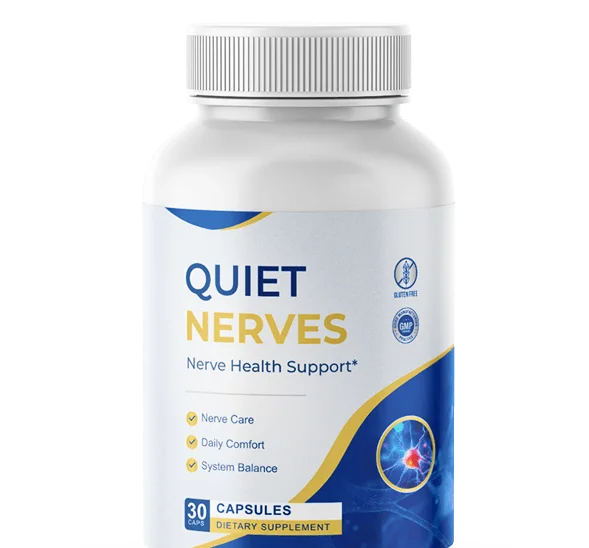
One capsule that gathers the usual suspects
Quiet Nerves brings alpha-lipoic acid, L-carnitine, magnesium glycinate, turmeric and more into a single daily capsule, with a 60-day money-back guarantee on the official store.
See Quiet Nerves On The Official StoreWhy nerve pain and tingling feel worse at night
Almost everyone who searches for vitamins for nerve pain also asks why the symptoms spike after dark — it is one of the most common follow-up questions people ask, and it deserves a real answer. Several things stack up at once. During the day your attention is spread across work, movement and conversation, and the brain filters out a lot of the low-grade nerve chatter. Lie down in a quiet room and that filter drops, so the same signal feels louder. Your skin temperature and blood-flow patterns also change when you are still and horizontal, which can make an irritated nerve more reactive. For people with blood-sugar issues, overnight glucose swings can add to it. And plain mechanics play a part: staying in one position for hours can compress or stretch a nerve that is already unhappy.
None of that is a diagnosis, but it explains why "it is worst when I try to sleep" is so common. It also explains why a steady daily nutrient routine — taken with a meal, at the same time — makes more sense than reaching for something only when the burning flares. Nerves respond to consistency, not to rescue doses.
Three myths worth clearing up before you buy anything
Myth 1: "A high enough dose of vitamins will cure my neuropathy." No supplement cures nerve damage, and any product that says so is one to walk away from. What good nutrients can do is reduce symptoms, correct a deficiency that is causing them, and support the environment nerves need to heal. That is meaningful — but it sits alongside managing the cause, not instead of it.
Myth 2: "If a little helps, more must be better." This is actively dangerous with at least one nutrient. Vitamin B6 helps nerves at normal amounts but can, in chronic megadoses, cause a nerve problem of its own — which is exactly why the number on a label matters. We cover the full picture in our explainer on safe vitamin B6 dosing for neuropathy and the toxicity ceiling, and it is the clearest example of why transparency beats bravado.
Myth 3: "One ingredient is all I need." The research points the other way. ALA, a B-vitamin and acetyl-L-carnitine address different parts of the same problem — oxidative stress, nerve maintenance and cellular energy — which is why they are so often combined. The trade-off is that a combination product has to fit several actives into one serving, so the amount of each one is the thing to watch.
How Quiet Nerves fits into the picture
Quiet Nerves is a once-daily nerve-health capsule built around several of the ingredients above: alpha-lipoic acid and L-carnitine — the two with the most nerve-specific evidence — alongside magnesium glycinate for normal nerve signalling, turmeric extract standardised to 95% curcuminoids, butcher's broom and coenzyme Q10. As a convenience play, it is a sensible shortlist: instead of buying and timing four or five separate bottles, you take one capsule with a meal.
We review it honestly, and honesty cuts both ways. The strength is the ingredient selection — these are the right names, not filler. The limitation is that the sales page does not publish the milligram amount of each active, and for nutrients whose entire usefulness is a question of quantity, the amount is what you most want to know. We walk through exactly how much a single daily capsule can physically hold across six ingredients in a separate breakdown, and it is worth reading before you commit to a multi-bottle order. If dose transparency is your priority, ask the manufacturer for the Supplement Facts panel before you buy — a company confident in its formula can send it in one reply.
How long before you notice anything
Set your expectations in weeks and months, not days. Nerves are among the slowest tissue in the body to respond. The ALA trials generally measured change over three to five weeks; B-vitamin repletion is gradual; carnitine's nerve effects are judged over months. A fair personal trial is two to three months of consistent, daily use — same time, with food, no skipped days. Pick one specific symptom to track (the burning at night, the numbness in a particular toe, how far you can walk before it starts) and rate it weekly. Vague "do I feel better?" checks are useless because the change is slow enough to hide. A written score is not.
Two safety notes worth repeating. If you take medication — especially for diabetes, thyroid or blood clotting — or you are pregnant or breastfeeding, run any new supplement past a pharmacist or doctor first, because some of these nutrients interact. And treat sudden, severe, or rapidly spreading numbness or weakness as a reason to seek medical care now, not a reason to buy a supplement. Vitamins are for the slow, nagging, chronic version of this problem — not the emergency version.
The short answer, one more time
The vitamins for nerve pain worth your money are the ones with human evidence: alpha-lipoic acid first, then a B-vitamin (B12 or benfotiamine) where there is a real shortfall, with acetyl-L-carnitine for energy and repair. Match them to what is driving your symptoms, give them a proper two-to-three month run, and judge them against a written symptom score. A well-chosen combination like Quiet Nerves can make that routine simpler — just make sure you know what is in each capsule before you buy in bulk.

Ready to simplify your nerve-support routine?
Quiet Nerves puts the best-known nerve nutrients into one capsule a day, backed by a 60-day money-back guarantee through the official store.
Order Quiet Nerves From The Official StoreRelated reading
Frequently asked questions
What vitamin is best for nerve pain?
No single vitamin wins for everyone, because nerve pain has different causes. Alpha-lipoic acid has the strongest human-trial record for easing burning, tingling and numbness, while vitamin B12 and benfotiamine (a B1 derivative) support the nerve itself, and acetyl-L-carnitine helps nerve energy metabolism. The best choice depends on what is driving your symptoms, which is worth checking with a clinician.
Why is nerve pain and tingling worse at night?
Several things stack up after dark. There are fewer daytime distractions, so the brain notices the signal more; skin temperature and blood-flow patterns shift as you lie down; and blood-sugar swings can be larger overnight for some people. Position matters too — lying still can compress or stretch an already irritated nerve. None of this is a rule, but it is why symptoms so often peak at bedtime.
How long until vitamins ease nerve pain?
Expect weeks, not days. Trials of alpha-lipoic acid have generally reported meaningful changes over roughly three to five weeks of consistent daily use, and B-vitamin repletion is similarly gradual. Nerves are slow tissue. Give any nutrient a fair, uninterrupted trial of two to three months before deciding whether it helps you, and track a specific symptom so you can tell.
Can supplements reduce burning and numbness in the feet?
For some people, yes — alpha-lipoic acid in particular has reduced burning, stabbing and numbness in controlled studies, and correcting a genuine B12 or B1 shortfall can ease symptoms driven by that deficiency. Supplements are not a substitute for finding and treating the underlying cause, and they help most when they are one part of that larger picture.
References
- Ziegler D et al. Oral treatment with alpha-lipoic acid (the SYDNEY 2 trial). Diabetes Care, 2006
- NIH Office of Dietary Supplements — Vitamin B12: Fact Sheet for Health Professionals
- Stracke H et al. Benfotiamine in diabetic polyneuropathy (BENDIP study). Exp Clin Endocrinol Diabetes, 2008
- Sima AAF et al. Acetyl-L-carnitine improves pain and nerve regeneration in diabetic neuropathy. Diabetes Care, 2005
- NIH Office of Dietary Supplements — Magnesium: Fact Sheet for Health Professionals