Vitamin B6 for Neuropathy: The Dose That Helps and the Limit That Harms
Is vitamin B6 good or bad for neuropathy?
Vitamin B6 for neuropathy is a two-edged nutrient: adequate amounts support nerve signalling, but chronic high doses can cause a sensory neuropathy of their own. Keep total daily B6 at or below the 100 mg upper limit, aim for adequacy rather than megadosing, and choose a formula that publishes exactly how much it contains.
- Daily need is small — roughly 1.3 to 2 mg; the safe upper limit is 100 mg/day.
- Chronic intakes above ~100–200 mg/day can itself trigger nerve symptoms.
- Because B6 both helps and harms, the milligrams on the label matter most.

Here is the strange, important fact almost nobody tells you when they recommend it: vitamin B6 for neuropathy can be both the fix and the cause. Too little B6 damages nerves. Too much B6, taken for long enough, also damages nerves — with the very same burning, tingling and numbness people take it to escape. That U-shaped risk is exactly why B6 deserves a careful, numbers-first explainer rather than a breezy "B-vitamins are good for nerves" line, and why the dose printed on your label is not a detail. It is the whole decision.
This page walks through what B6 actually does for nerves, the amount that is genuinely helpful, the ceiling you should not cross, the warning signs of too much, and how to read a supplement label so you never overshoot by accident. None of it is medical advice — it is the context that lets you have a smarter conversation with your pharmacist or doctor, and a smarter look at any product you are considering.
What vitamin B6 does for your nerves
Vitamin B6 — pyridoxine and its active forms — is a workhorse coenzyme. It helps build several of the neurotransmitters your nervous system uses to send signals, and it is involved in the metabolism that keeps nerve cells running. A genuine B6 deficiency can produce neurological symptoms, including the kind of tingling and numbness that overlaps with other neuropathies. So there is a real, legitimate role for B6 in nerve health: making sure you have enough.
The catch is that "enough" is a small number. The recommended daily intake for most adults sits around 1.3 to 2 milligrams — the kind of amount you get from a normal diet plus a modest multivitamin. B6 is not a nutrient where the deficiency is common in well-fed people, which means the "more must be better" instinct is especially misplaced here. Once you are topped up, extra B6 does not buy extra nerve protection. Past a point, it does the opposite.
The paradox: why too much B6 harms nerves
This is the part that surprises people. High-dose vitamin B6, taken consistently over months, can cause a sensory neuropathy — a nerve problem driven by the supplement itself. It typically shows up as tingling, pins-and-needles, numbness in the hands and feet, and sometimes clumsiness or an unsteady walk, because the sensory nerves that carry position and touch information are the ones most affected. The effect is generally dose- and time-dependent: the higher the daily amount and the longer you take it, the greater the risk. The reassuring flip side is that it usually improves after the excess is stopped — but "usually reversible" is a poor consolation for months of new symptoms.
How much is too much? Regulators set a tolerable upper intake level for adults at 100 mg a day from supplements, precisely because of this nerve risk. Reported cases of B6-induced neuropathy have often involved chronic intakes above roughly 100 to 200 mg a day, sometimes much higher, sustained over long periods. The practical takeaway is simple and worth repeating: with B6, the goal is adequacy, not a megadose, and staying at or below that upper limit is the cautious default for anyone not under specific medical supervision.
How to read a label so you never overshoot
Because B6 hides in more products than people realise, accidental stacking is the real-world danger. It can appear in your multivitamin, a separate B-complex, an energy or "stress" formula, and a nerve-support blend — all at once. Add those up and a person taking three "sensible" products can quietly cross the upper limit without ever buying a high-dose B6 bottle on purpose.
So the skill is arithmetic. Read the Supplement Facts panel on everything you take, find the B6 line (listed as vitamin B6 or pyridoxine), and add the milligrams together. That total is the number that matters — not the amount in any single product. If a formula does not publish its B6 amount at all, you cannot do this sum, and that alone is a reason for caution. Transparency is not a nicety with B6; it is a safety feature. The same principle applies to other nutrients where quantity is everything, which is why we walk through how much a single daily capsule can actually hold in a separate breakdown.

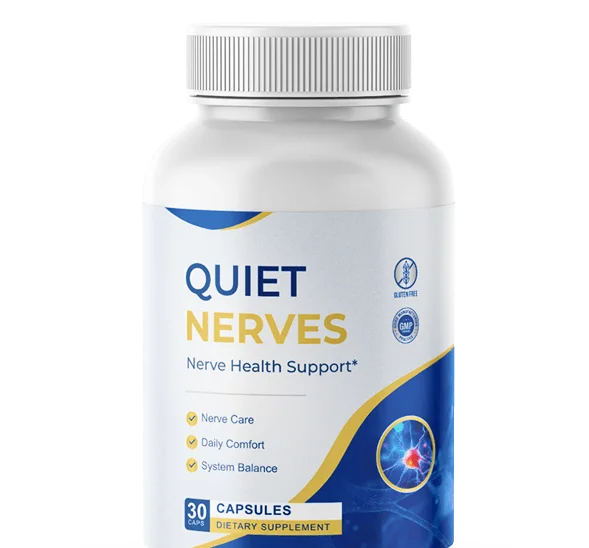
A nerve formula that isn't built on megadoses
Quiet Nerves leans on alpha-lipoic acid, L-carnitine and magnesium glycinate rather than high-dose B6 — one capsule a day, with a 60-day money-back guarantee on the official store.
See Quiet Nerves On The Official StoreCommon questions and myths about B6
"If B6 is a water-soluble vitamin, can't I just pee out the excess?" This is the myth that causes the most trouble. Water-soluble does not mean harmless in unlimited amounts. B6 is the clearest exception to the "you'll just excrete it" rule — chronic high intakes accumulate their effect on sensory nerves regardless of how quickly the vitamin itself clears. Treat B6 like a nutrient with a real ceiling, because it has one.
"A doctor told someone I know to take high-dose B6 — so it must be fine." There are specific, supervised medical reasons a clinician might prescribe higher B6 for a set period, with monitoring. That is a different situation from buying open-ended megadoses off a shelf and taking them indefinitely. The presence of a legitimate medical use does not make unsupervised long-term megadosing safe.
"More B-vitamins will speed up my nerve recovery." Not the way people hope. B-vitamins help when they correct a shortfall; beyond that, piling them on does not accelerate healing, and with B6 it adds risk. If nerve repair is your actual goal, the evidence points more toward ingredients studied for repair — which we cover in our guide to benfotiamine for nerve damage and how it differs from ordinary B-vitamins.
Who is most at risk of accidental B6 overload
Some people run into trouble with B6 not because they set out to megadose, but because their whole routine adds up quietly. The classic pattern is the diligent supplement-taker: a daily multivitamin, a separate B-complex "for energy", a stress or adrenal formula, and a nerve blend on top — each modest on its own, each with a B6 line, and no one adding them together. People who take pre-formulated energy drinks or fortified powders can stack even higher without realising fortified foods count too.
Age and habit matter as well. Someone who found a high-dose B6 product years ago, felt fine, and simply kept reordering can accumulate months and then years of intake well above the ceiling — and because B6-related nerve symptoms build slowly, the connection is easy to miss. Older adults taking several products for several reasons are especially prone to the silent stack. The fix is not fear of B6; it is a five-minute audit. Lay every bottle on the table, read each Supplement Facts panel, add the B6 milligrams, and see where you actually land. Most people are surprised, and a surprising number are higher than they assumed. That single habit — knowing your total, from every source — is the whole of B6 safety in practice.
Should you take B6 alone or in a B-complex?
For general nerve support, a sensibly dosed B-complex is usually the safer choice than an isolated high-dose B6 pill. The B-vitamins work as a team, a balanced formula keeps each one in a reasonable range, and it is much harder to accidentally megadose a single vitamin when the product was designed around adequacy rather than a big number on the front. Isolated high-dose B6 is best reserved for a specific reason under supervision — not as a default "for my nerves" habit. Whatever you choose, the deciding number is the milligrams on the label, and a formula that hides that number is one to question.
Where Quiet Nerves stands on the dose question
This is where formula philosophy matters. Quiet Nerves is not built as a B6 megadose product — its formula is anchored on alpha-lipoic acid and L-carnitine, alongside magnesium glycinate, turmeric extract, butcher's broom and coenzyme Q10. That is a meaningful point in its favour on the specific issue this article is about: a nerve supplement whose strategy is antioxidant and nerve-energy support, rather than piling in high-dose B6, sidesteps the toxicity trap entirely.
We review it independently, so the same standard applies here as everywhere: the sales page does not publish the milligram amount of each ingredient up front. On B6 that is less of a worry, because B6 is not the headline of this formula — but the principle we have argued throughout this page still holds. The way to be sure of any supplement is to see the Supplement Facts panel and do your own arithmetic. Before a multi-bottle order, ask the manufacturer for the panel; a company confident in its dosing sends it without fuss. For the wider picture of B-vitamins and nerves, our explainer on B-vitamins and neuropathy puts B6 in context with B1 and B12.
The bottom line on vitamin B6 for neuropathy
Vitamin B6 for neuropathy is genuinely useful in the right amount and genuinely harmful in the wrong one. Aim for adequacy — small daily amounts, not megadoses. Keep your total from all sources at or below the 100 mg upper limit unless a clinician is supervising something specific. Add up the B6 across every product you take, and be wary of any formula that will not tell you its number. And if you develop new tingling, numbness or unsteadiness after months on a B6-heavy regimen, treat that as a prompt to review the dose with a professional — the paradox is real, and it is fixable when caught. A nerve formula that leads with antioxidants and nerve-energy ingredients, rather than a big B6 number, is a sensible fit for anyone who has read this far.
Prefer sensible dosing over big numbers?
Quiet Nerves is one capsule a day, built on alpha-lipoic acid and L-carnitine rather than high-dose B6, and backed by a 60-day money-back guarantee through the official store.
Order Quiet Nerves From The Official StoreRelated reading
Frequently asked questions
How much vitamin B6 is safe for neuropathy?
For most adults, keeping total daily B6 at or below the tolerable upper intake level of 100 mg from supplements is the cautious approach, and everyday needs are far lower — around 1.3 to 2 mg a day. Problems are consistently linked to chronic high intakes, often cited above 100 to 200 mg daily over months. When in doubt, aim for adequacy, not a megadose.
Can too much vitamin B6 cause nerve damage?
Yes — this is the paradox of B6. Chronic high doses can cause a sensory neuropathy of their own, with tingling, numbness and unsteadiness, even though a deficiency also causes nerve symptoms. The effect is usually dose- and time-dependent and tends to improve after stopping, but it is a real reason to avoid open-ended megadosing.
What are signs of vitamin B6 toxicity?
The classic pattern is a sensory neuropathy: tingling, pins-and-needles, numbness in the hands and feet, clumsiness or an unsteady gait, and sometimes heightened skin sensitivity. Symptoms usually build gradually over months of high intake and often ease after stopping. Because they mimic the very problem people take B6 to fix, the dose on your label matters.
Should B6 be taken alone or in a B-complex?
For general nerve support, a sensibly dosed B-complex is usually the safer route, because the B-vitamins work together and a balanced formula makes accidental megadosing less likely. Isolated high-dose B6 is best reserved for a specific, supervised reason. Either way, the number that matters is the milligrams on the label — which is exactly why formula transparency is worth checking.
References
- NIH Office of Dietary Supplements — Vitamin B6: Fact Sheet for Health Professionals
- Schaumburg H et al. Sensory neuropathy from pyridoxine abuse. N Engl J Med, 1983
- Institute of Medicine — Dietary Reference Intakes: Vitamin B6 tolerable upper intake level
- NINDS — Peripheral Neuropathy information page