Magnesium Glycinate: Why the Word on the Label Is Not the Dose
The short version
Magnesium bisglycinate is roughly 14% elemental magnesium by weight, so about 710 mg of the compound is needed for 100 mg of magnesium. Quiet Nerves puts it in one daily capsule with five other ingredients and publishes no amount for any of them, which makes the claim impossible to check.
- Magnesium bisglycinate is about 14% elemental magnesium; the other 86% is glycine.
- The adult reference intake is 310–320 mg a day for women and 400–420 mg for men; the upper level from supplements alone is 350 mg.
- A size 00 capsule holds roughly 0.95 mL — well under a gram of powder, shared here between six ingredients.
- The bottle you receive must carry a Supplement Facts panel. What is missing is any publication of it before you pay.

The compound is mostly glycine by weight
Magnesium glycinate — more precisely magnesium bisglycinate — is one magnesium ion bound to two molecules of the amino acid glycine. That is the whole point of the form: the glycine escorts the mineral, and organic magnesium salts of this kind are generally reported to absorb better than magnesium oxide. It is also the reason the label word tells you so little.
Work the weights. Magnesium's atomic mass is about 24.3. Each glycinate ion is about 74.1, so two of them come to roughly 148. The whole compound is therefore about 172, of which magnesium itself is about 24 — near enough 14% elemental magnesium by weight. The other 86% is the carrier.
That single percentage does most of the work on this page:
- 100 mg of elemental magnesium needs about 710 mg of magnesium bisglycinate.
- The adult reference intake — 310–320 mg a day for women, 400–420 mg for men, counting food and supplements together — would need over two grams of the compound.
- The tolerable upper intake level for magnesium from supplements and medicines is 350 mg a day for adults, which is a separate number from the reference intake and is the one that matters when you are reading a supplement label.
There is a second complication. A good deal of what is sold as "magnesium glycinate" is buffered — blended with magnesium oxide, which is cheap and much denser in elemental magnesium. A buffered blend raises the milligrams of magnesium per capsule and lowers the cost, and unless a label states elemental magnesium separately from compound weight, you cannot tell which you are buying. Quiet Nerves states neither.
What one capsule can physically hold
Capsules come in standard sizes with published internal volumes: a size 00 holds roughly 0.95 mL, a size 0 roughly 0.68 mL. How many milligrams that works out to depends on the density of the powder going in, which is why manufacturers quote fill weights as ranges rather than a single figure — but the ceiling is real, and it is well under a gram for the sizes people actually swallow once a day.
Now put the two facts together. Quiet Nerves is one capsule daily, and that capsule contains six ingredients: magnesium glycinate, alpha lipoic acid, butcher's broom, L-carnitine, turmeric extract and coenzyme Q10. Whatever the capsule size, those six share it. A magnesium dose anywhere near the reference intake would fill the capsule on its own several times over, leaving nothing for the other five — and magnesium glycinate is the ingredient the vendor itself calls the cornerstone of the formula.
That is not an accusation. It is arithmetic, and the only thing that would settle it is the number the manufacturer has chosen not to print.
“Not disclosed” is not a small omission
Be precise about what is missing here. The bottle that arrives at your door is required to carry a Supplement Facts panel — the format is set out in the US regulations at 21 CFR 101.36, and it has to list each ingredient with its amount per serving. What is missing is any publication of that panel before you buy: no photograph of the back label, no transcription on the sales page, nothing in any of the images the page loads. The two blurred bottle shots the vendor supplies are duplicates of the same front label, deliberately thrown out of focus, so there is no back panel to read even at full resolution.
So the panel almost certainly exists. You simply do not get to see it until you have paid, received the bottle, and — if you do not like what it says — started a return that costs you the shipping both ways and up to a fifth of the order value in processing fees.
What the absorption research actually supports
Two things, reliably. First, the form matters: comparisons of commercial magnesium preparations have repeatedly found organic salts more bioavailable than magnesium oxide, which is the honest case for choosing a glycinate at all. Second, absorption is dose-dependent in an unhelpful direction — the fraction you absorb falls as the size of a single dose rises, which is why split dosing is a common recommendation and why a very large single capsule is not automatically better than a smaller one.
Both of those findings are about how much. Neither can be applied to a product that does not say how much it contains. Choosing a well-absorbed form and then declining to state the amount is a strange combination: it advertises the part that is cheap to claim and withholds the part that would let you check.
The same question applies to the other five
- Alpha lipoic acid. The most-cited oral trials used 600 mg a day, as a single ingredient in its own capsule. That is the benchmark anyone comparing products will reach for, and there is no way to compare this one to it.
- Turmeric at 95% curcuminoids. A standardisation, not a dose. It tells you the extract is concentrated; it tells you nothing about how much extract is in the capsule. Curcumin is also poorly absorbed on its own, well enough documented that serious formulas name an absorption strategy. This one does not.
- L-carnitine. Plain L-carnitine, acetyl-L-carnitine and L-carnitine tartrate are not interchangeable and are studied for different things. The page never says which is in here.
- Coenzyme Q10. Ubiquinone or ubiquinol — different prices, different absorption, unstated.
- Butcher's broom. For a botanical you need the extract ratio and the standardisation as well as the weight. None of the three is given.
Five questions worth asking before you buy six bottles
- How many milligrams of elemental magnesium are in one capsule?
- Is the magnesium pure bisglycinate, or is it buffered with magnesium oxide?
- What are the milligram amounts of the other five ingredients?
- Which forms are the L-carnitine and the CoQ10?
- Can you email a photograph of the Supplement Facts panel?
A manufacturer that knows its own formula can answer all five in one short reply. The answer — or the absence of one — tells you more about a six-bottle order than any page of marketing copy will.
What this does not mean
It does not mean the capsule is empty, and it does not mean the product is unsafe. Undisclosed is not the same as absent, and every ingredient in this formula is a normal, widely sold supplement ingredient. What it means is narrower and more useful: you cannot check. For a formula led by a mineral whose entire usefulness is a question of quantity, the check is the thing — and it is the one thing this label, as published, does not let you do.
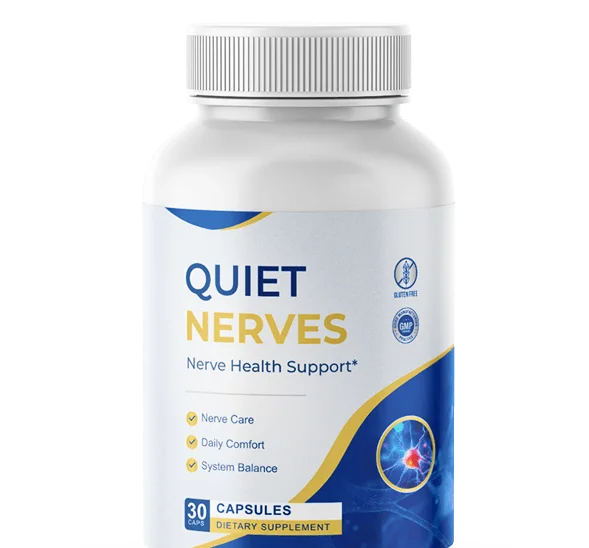
The capsule this arithmetic is about
Quiet Nerves leads with magnesium glycinate, takes one capsule a day, and publishes no amount for any of its six ingredients.
Order NowFrequently asked questions
How much elemental magnesium is in magnesium glycinate?
About 14% by weight for pure magnesium bisglycinate, because the magnesium ion is bound to two glycine molecules that make up the rest. Roughly 710 mg of the compound gives you about 100 mg of elemental magnesium. Many products sold under the name are buffered with magnesium oxide, which raises that percentage — and unless the label separates elemental magnesium from compound weight, you cannot tell which you have.
Is magnesium glycinate better absorbed than magnesium oxide?
Comparisons of commercial magnesium preparations have generally found organic salts, glycinate among them, more bioavailable than magnesium oxide. The size of the difference varies between studies, and absorption of any form falls as the single dose gets larger, which is why split doses are often recommended.
Does Quiet Nerves publish its magnesium dose?
No. There is no Supplement Facts panel on the sales page or in any of the images it loads, and no amount is stated for magnesium glycinate or for any of the other five ingredients. The only number printed anywhere in the ingredient section is "95% curcuminoids", which describes the turmeric extract's concentration rather than its amount.
What is the safe upper limit for magnesium supplements?
For adults the tolerable upper intake level for magnesium from supplements and medicines is 350 mg a day — a separate figure from the reference intake, which counts food as well. The usual dose-related complaint is loose stools. Anyone with reduced kidney function should treat magnesium supplements as a conversation for their clinician, since the kidneys are what clear the excess.
References
- NIH Office of Dietary Supplements — Magnesium: Fact Sheet for Health Professionals
- Schuchardt JP, Hahn A. Intestinal absorption and factors influencing bioavailability of magnesium — an update. Curr Nutr Food Sci, 2017
- Firoz M, Graber M. Bioavailability of US commercial magnesium preparations. Magnes Res, 2001
- 21 CFR 101.36 — Nutrition labeling of dietary supplements (eCFR)
- Anand P et al. Bioavailability of curcumin: problems and promises. Mol Pharm, 2007
- Ziegler D et al. Oral treatment with alpha-lipoic acid (the SYDNEY 2 trial), Diabetes Care 2006 — source of the 600 mg/day oral figure cited above