Supplements for Nerve Repair: What Science Actually Says
Which supplements actually support nerve repair?
Supplements for nerve repair work in three ways: cutting ongoing damage with antioxidants like alpha lipoic acid and benfotiamine, supplying B12 to support the myelin sheath, and fuelling nerve cells with acetyl-L-carnitine. They are nutritional support, not a cure, and consistency over three to six months matters more than any single dose.
- Reduce damage: alpha lipoic acid and benfotiamine limit oxidative and glycation injury.
- Rebuild insulation: vitamin B12, ideally methylcobalamin, supports the myelin sheath.
- Fuel the cell: acetyl-L-carnitine is the one active studied for nerve-fiber regeneration.

Search for supplements for nerve repair and you will find two extremes: pages promising to "regrow" or "reverse" damaged nerves, and skeptics insisting nothing works at all. Neither is honest. The truth sits in between, and it is genuinely more useful. Certain nutrients have real human research behind them for supporting the conditions nerves need to heal — and just as importantly, there is a clear ceiling on what any capsule can do. This guide lays out both sides: what the science supports, what it does not, and how to use repair-support nutrients sensibly rather than hopefully.
The most important reframe up front: peripheral nerves can regenerate, but slowly, and only under the right conditions. Supplements for nerve repair do not perform the repair. What they can do is help build the environment in which repair is possible — less ongoing injury, better raw materials, more cellular energy — while the actual cause of the damage is addressed medically. Hold that distinction and everything below makes sense.
What "nerve repair" really means (and what supplements can't do)
When people say they want to repair damaged nerves, they usually mean one of a few different things: less tingling or numbness, better sensation, or the underlying nerve fibers physically recovering. Those are not the same target, and nutrition affects them differently. It helps to break "repair" into three biological jobs, because each maps to a different nutrient:
- Stop the bleeding, so to speak — reduce ongoing damage. A large share of nerve injury, especially in metabolic causes, comes from oxidative stress and glycation (sugar-driven damage). Antioxidant support aims to slow that ongoing harm so the body is not repairing and re-injuring at the same time.
- Rebuild the insulation. Nerves are wrapped in a myelin sheath, and maintaining that insulation depends on specific nutrients, B12 chief among them.
- Power the cell. Nerve cells are energy-hungry, and repair is metabolically expensive. Supporting the cellular energy machinery gives the repair process fuel.
What supplements cannot do: they cannot cure neuropathy, they cannot reverse damage on their own, and they cannot substitute for treating the root cause — whether that is blood-sugar control, a nutrient deficiency, alcohol, a medication side effect, or something else. Any product claiming to "repair" or "reverse" nerve damage is overstepping what the evidence allows. The honest framing is support, and it is a framing worth holding onto.
The supplements for nerve repair with the best evidence
Strip this category down to what has actually been tested in people and the list is short. Here are the actives that earn a place, organized by the three repair jobs above.
Alpha lipoic acid — reduce oxidative damage

Alpha lipoic acid (ALA) is the most-studied single ingredient in the whole nerve-support space. As a potent antioxidant that works in both watery and fatty parts of the cell, its role in the "reduce ongoing damage" job is exactly what the research targets. The most-cited oral studies used around 600 mg a day, and that is the number to carry with you when comparing products. It does not rebuild a nerve; it helps limit the oxidative injury that keeps damaging one. For the full dosing detail, see our breakdown of the alpha lipoic acid dosage used in neuropathy research.
Benfotiamine — block the glycation pathway
Benfotiamine is a fat-soluble form of vitamin B1 (thiamine) that absorbs more readily than the standard water-soluble version. Its interest for nerve repair lies in the glycation pathway — the process by which excess sugar forms advanced glycation end-products that damage tissue over time. By supporting that pathway, benfotiamine belongs firmly in the "reduce ongoing damage" column alongside ALA. It is one of the classic evidence-backed actives, though not every formula includes it.
Vitamin B12 (methylcobalamin) — support the myelin sheath
Vitamin B12 is the headline nutrient for the "rebuild the insulation" job. B12 is directly involved in maintaining the myelin sheath that wraps and protects nerves, and genuine B12 deficiency is itself a recognized cause of nerve problems — which is exactly why correcting a deficiency can matter so much. The active form, methylcobalamin, is used by the body without conversion. If you want the deeper explanation of how the B vitamins connect to nerve health, our guide to how the B vitamins relate to neuropathy covers it in full.
Acetyl-L-carnitine — the fuel, and the regeneration outlier
Acetyl-L-carnitine (ALCAR) is the most interesting active in a repair conversation, because it is the rare ingredient studied specifically for nerve-fiber support and regeneration rather than comfort alone. It plays into the "power the cell" job by supporting mitochondrial energy production. The form matters: plain L-carnitine and L-carnitine tartrate are not interchangeable with acetyl-L-carnitine, so a label that just says "L-carnitine" is not automatically claiming the ALCAR research. Our dedicated explainer on acetyl-L-carnitine for nerve health goes deeper on why the acetylated form is the one to look for.
A repair-support stack in one daily capsule
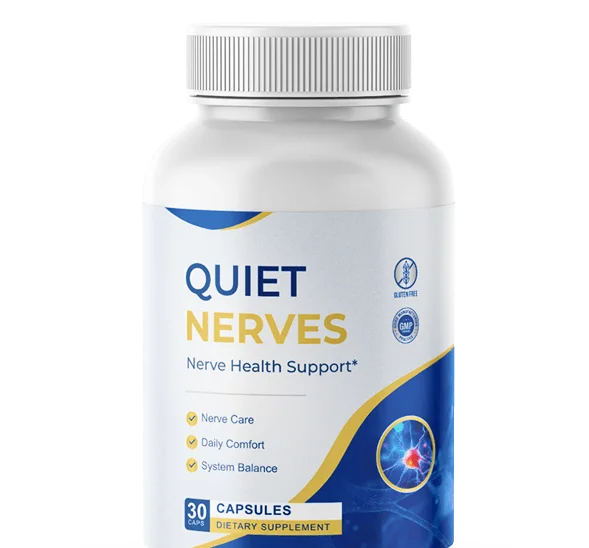
Quiet Nerves combines alpha lipoic acid, L-carnitine, turmeric extract, magnesium glycinate, butcher's broom and CoQ10 — and backs every order with a 60-day money-back guarantee, so you can read the label on the bottle before committing to a full three-to-six-month trial.
Check Today's Price & GuaranteeWhy consistency over 3 to 6 months matters most
Here is the single biggest mistake people make with supplements for nerve repair: they quit too early. Nerves change slowly. The oxidative and metabolic environment you are trying to improve took months or years to develop, and shifting it is not an overnight process. Comfort-related changes, when they occur, may appear within a few weeks — but any structural support is measured in three to six months of daily, uninterrupted use.
This is why the biggest predictor of getting anything out of a repair-support supplement is not which brand you pick but whether you actually take it every day for long enough. A bottle abandoned after two weeks is a bottle that never got a fair trial. Build it into a daily anchor — the same meal each day — and judge results on a months-long horizon. It also explains why a 60-day money-back window is genuinely useful: it is long enough to cover a real, honest trial rather than an impatient one.
Outcomes depend on cause and severity
The uncomfortable truth is that identical supplements produce very different results in different people, and it is mostly about the cause and severity of the damage. Nerve issues driven by a correctable factor — a B12 deficiency, poorly controlled blood sugar, heavy alcohol use — often have the most room to improve when that factor is addressed and nutritional support is layered on top. Damage that is long-standing or severe has less to gain, and some causes will not respond to nutrition at all.
That is not a reason for pessimism; it is a reason to be strategic. The two things that most improve your odds are starting support early and fixing the underlying driver in parallel. A supplement working alongside good blood-sugar control is in a completely different situation than a supplement asked to work while the damage keeps accumulating. If you want to see how the leading products stack up on exactly these actives, our guide to nerve-regeneration supplements compares the field.
Three myths about nerve-repair supplements
Myth 1: A supplement can regrow or reverse damaged nerves. No dietary supplement does this, and the claim is not one any product is allowed to make. Nerves may regenerate under the right conditions, but the supplement is support, not the mechanism. Treat "reverse" language as a red flag.
Myth 2: More ingredients means more repair. A capsule has fixed volume, so a long ingredient list can quietly force every individual amount down. Four well-dosed repair actives beat a dozen token ones. When a label lists many ingredients but no milligram amounts, assume crowding is doing work the copy will not admit.
Myth 3: If it hasn't worked in a month, it never will. This is backwards for nerve repair. One month is often too early to judge structural support. Give it the full three-to-six-month runway before deciding — while, of course, watching for any side effects and staying in touch with your healthcare provider.
Where Quiet Nerves fits — and its honest limits
Quiet Nerves is a once-daily, 30-capsule formula built around the antioxidant-and-energy side of the repair equation: magnesium glycinate, alpha lipoic acid, L-carnitine, turmeric extract at 95% curcuminoids, butcher's broom and coenzyme Q10. On the "reduce ongoing damage" and "power the cell" jobs, that is a sensible lineup — it leads with ALA and pairs it with several antioxidant and circulation-support actives.
In the interest of the same honesty this article is built on, two caveats. First, Quiet Nerves does not list benfotiamine or methylcobalamin, so if a B12-led approach to the "rebuild insulation" job is your priority, factor that in. Second, the sales page does not publish a full Supplement Facts panel with each ingredient's milligram amount before purchase — which is why the 60-day money-back guarantee matters: it lets you order, read the panel on the bottle, and return it if the amounts do not fit your plan. Used that way, it is a low-risk way to start a genuine three-to-six-month trial rather than a gamble.
Related reading
Frequently asked questions
Which supplements help repair damaged nerves?
The best-supported supplements for nerve repair support work in three ways: reducing ongoing damage (alpha lipoic acid and benfotiamine help limit oxidative and glycation-related injury), supporting the myelin sheath (vitamin B12, ideally as methylcobalamin), and fuelling nerve cells (acetyl-L-carnitine, the one active studied for nerve-fiber regeneration). These are nutritional support, not drugs, and they do not cure nerve damage.
Can damaged nerves heal with supplements?
Peripheral nerves can regenerate slowly under the right conditions, but supplements do not heal or cure nerve damage on their own. What repair-support nutrients can do is help create a healthier environment — less ongoing oxidative injury, better raw materials for myelin, more cellular energy — while the underlying cause is addressed medically. Outcomes depend heavily on the cause, the severity, and how early support begins.
How long do nerve-repair supplements take to work?
Consistency over three to six months matters most, because nerves change slowly. Comfort-related shifts, when they happen, may show up within a few weeks, but any structural support is a months-long process measured in daily doses. Judging a nerve-repair supplement after a week or two is judging it before it has had a fair chance. Take it every day and reassess over months, not days.
Are nerve-repair supplements safe with medications?
Many are well tolerated, but some interact. Alpha lipoic acid can enhance blood-sugar-lowering effects, which matters if you take diabetes medication, and high-dose B vitamins or other actives can interact with certain prescriptions. Always check with your doctor or pharmacist before combining supplements with medication, especially if you manage diabetes, thyroid issues, or take blood thinners. Supplements complement medical care; they do not replace it.
References
- Ziegler D et al. Oral treatment with alpha-lipoic acid (the SYDNEY 2 trial). Diabetes Care, 2006
- Sima AAF et al. Acetyl-L-carnitine and nerve fiber regeneration in diabetic neuropathy. Diabetes Care, 2005
- Stracke H et al. Benfotiamine in diabetic polyneuropathy (BENDIP study). Exp Clin Endocrinol Diabetes, 2008
- NIH Office of Dietary Supplements — Vitamin B12: Fact Sheet for Health Professionals
- NIH NINDS — Peripheral Neuropathy information page (causes and nerve regeneration)

Start a real three-to-six-month trial
Because repair support is a months-long project, the multi-bottle pack is the sensible way to buy. See official-store pricing, cost per serving, and the full 60-day money-back terms in one place.
Order Quiet Nerves From The Official Store